Can Mechanical Pencil Lead Be Erased?
Wondering if mechanical pencil lead can actually be erased? The short answer is yes, but the cleanup often leaves frustrating gray smudges or ghost lines on your paper.
Standard graphite formulas and paper textures interact in specific ways that make clean corrections tricky. As of 2026, understanding how polymer binders react with different writing surfaces solves most of these daily erasing headaches.
Quick Answer
Mechanical pencil lead erases successfully. Graphite mixes with polymer binders in the core. Paper texture traps these fine particles during writing.
Standard rubber erasers lift the top layer. Stubborn marks require specialized vinyl tools. Clean removal depends on paper tooth.
Why Mechanical Pencil Lead Leaves Ghost Lines and Smudges
Mechanical pencil lead differs fundamentally from traditional wooden core pencils. Manufacturers mix graphite powder with clay or polymer binders to create fine, consistent writing filaments. Polymer leads hold together better under pressure.
This durability prevents breakage inside narrow drafting tubes. Unfortunately, those exact polymers grip paper fibers tighter than natural clay binders do.
Standard erasers often push fine graphite particles deeper into the paper grain instead of lifting them out. When you apply heavy writing pressure, you crush those particles into microscopic valleys in the sheet. Standard rubber erasers lack the friction coefficient needed to scour out those deep grooves.
You end up with a shiny patch or a faint gray ghost line where your original writing used to be.
The Variables That Change Everything: Lead Grade, Size, and Paper
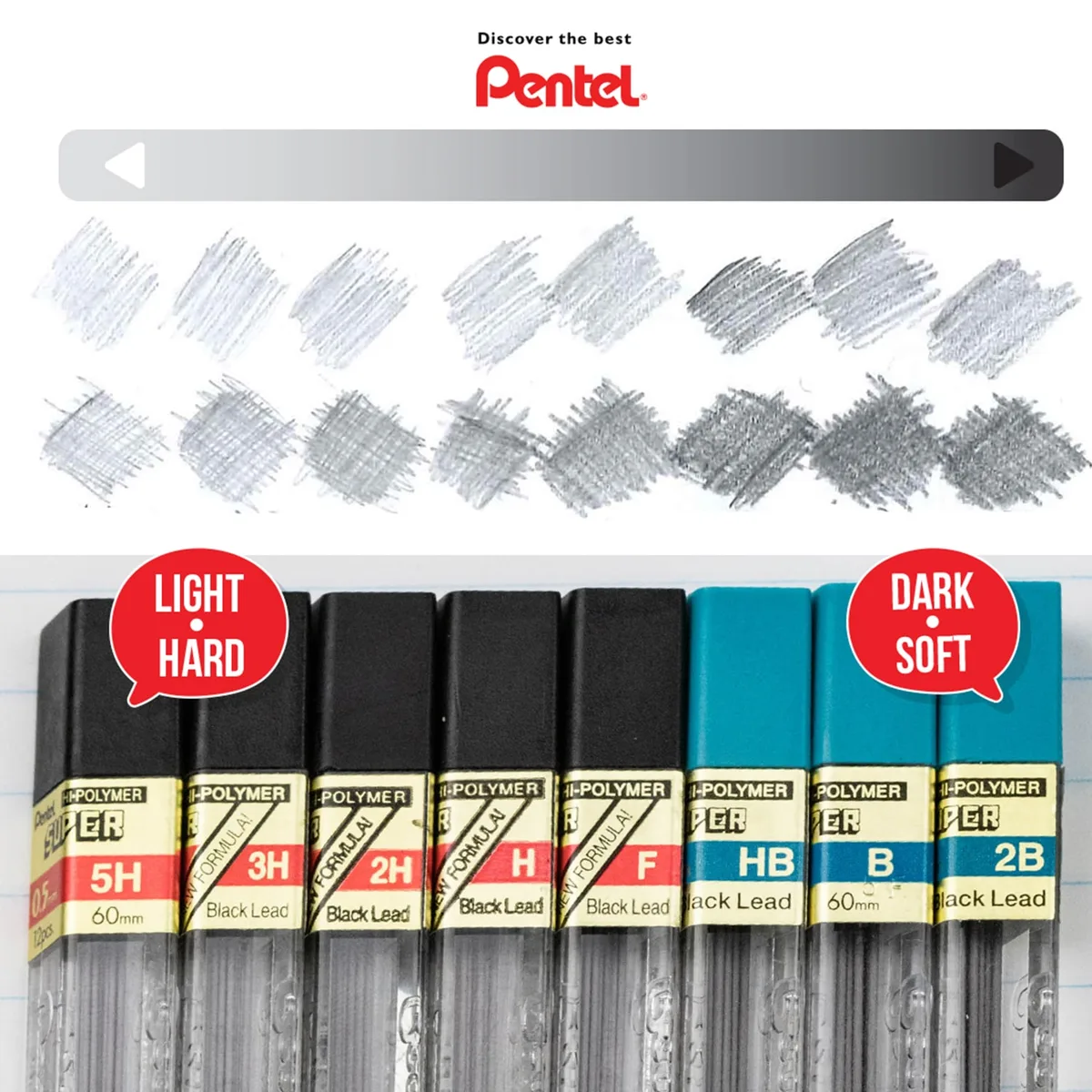
Your erasing success changes based on three core variables. Lead hardness dictates how much pigment transfers to the page. Softer leads like 2B contain more graphite and less binder.
They deposit thick, dark marks that smudge easily across the sheet. Harder grades like 2H leave light, shallow marks that lift away with minimal effort.
Lead diameter also plays a direct role in how deep the graphite settles. Ultra-fine 0.3mm leads concentrate immense pressure onto a tiny surface area. That pressure gouges the paper fibers directly.
Thicker 0.7mm or 0.9mm lines distribute weight more evenly across the page. Paper tooth determines how much grip the sheet has on loose graphite dust.
| Lead Grade | Hardness Level | Erasing Difficulty | Best Application |
|---|---|---|---|
| 4H to 2H | Hard | Very Easy | Technical drafting and light layout work |
| HB to F | Medium | Moderate | Everyday writing and note-taking |
| B to 4B | Soft | Difficult | Sketching, shading, and bold lines |
Smooth printer paper lacks the tooth of heavy drawing sketchbooks. Smooth paper lets you lift graphite easily. Textured paper traps pigment in deep valleys.
Matching your writing tool to the right paper makes corrections much simpler, as detailed in our guide on choosing student writing instruments.
Choosing the Right Eraser for Mechanical Pencil Graphite
Most pink erasers found on the backs of standard pencils fail on polymer leads. Old rubber erasers harden over time. They smear gray graphite across the page instead of absorbing it.
Upgrading your stationery kit solves this issue instantly. Vinyl erasers offer a sharp edge and a firm compound that strips graphite away cleanly.
Kneaded erasers work differently by acting like tacky putty. You mold them into a chisel shape to dab at stray lines without shedding any rubber debris. Vinyl blocks excel at broad corrections.
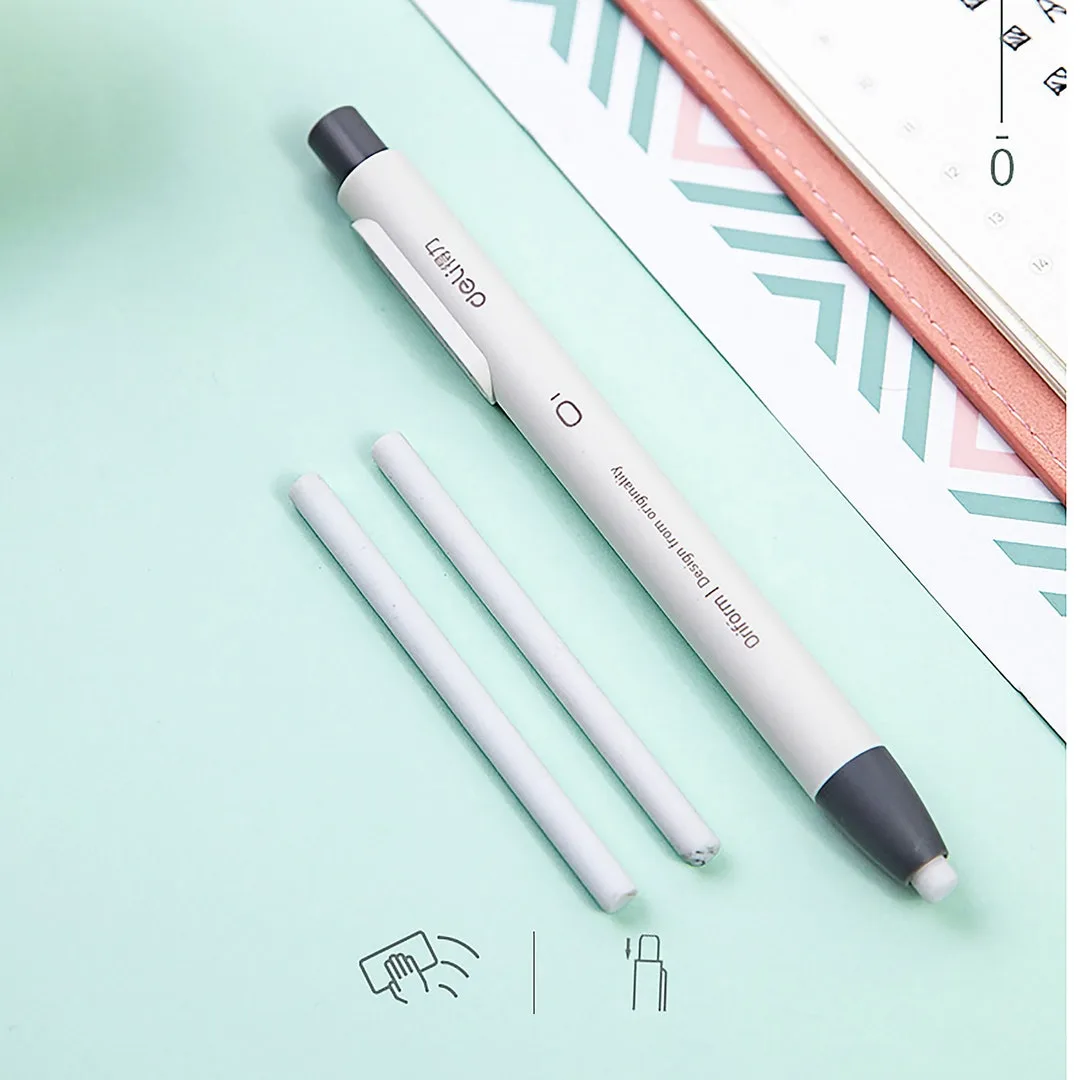
Precision pen-style erasers let you clean up single letters in tight engineering notes.
Authoritative standards organizations like the International Organization for Standardization outline strict performance tests for stationery materials, confirming that eraser abrasiveness directly dictates cleaning efficiency. Testing shows that soft vinyl compounds outperform traditional rubber blocks on synthetic graphite blends.
Step-by-Step Guide to Cleanly Erasing Fine Lines Without Tearing Paper
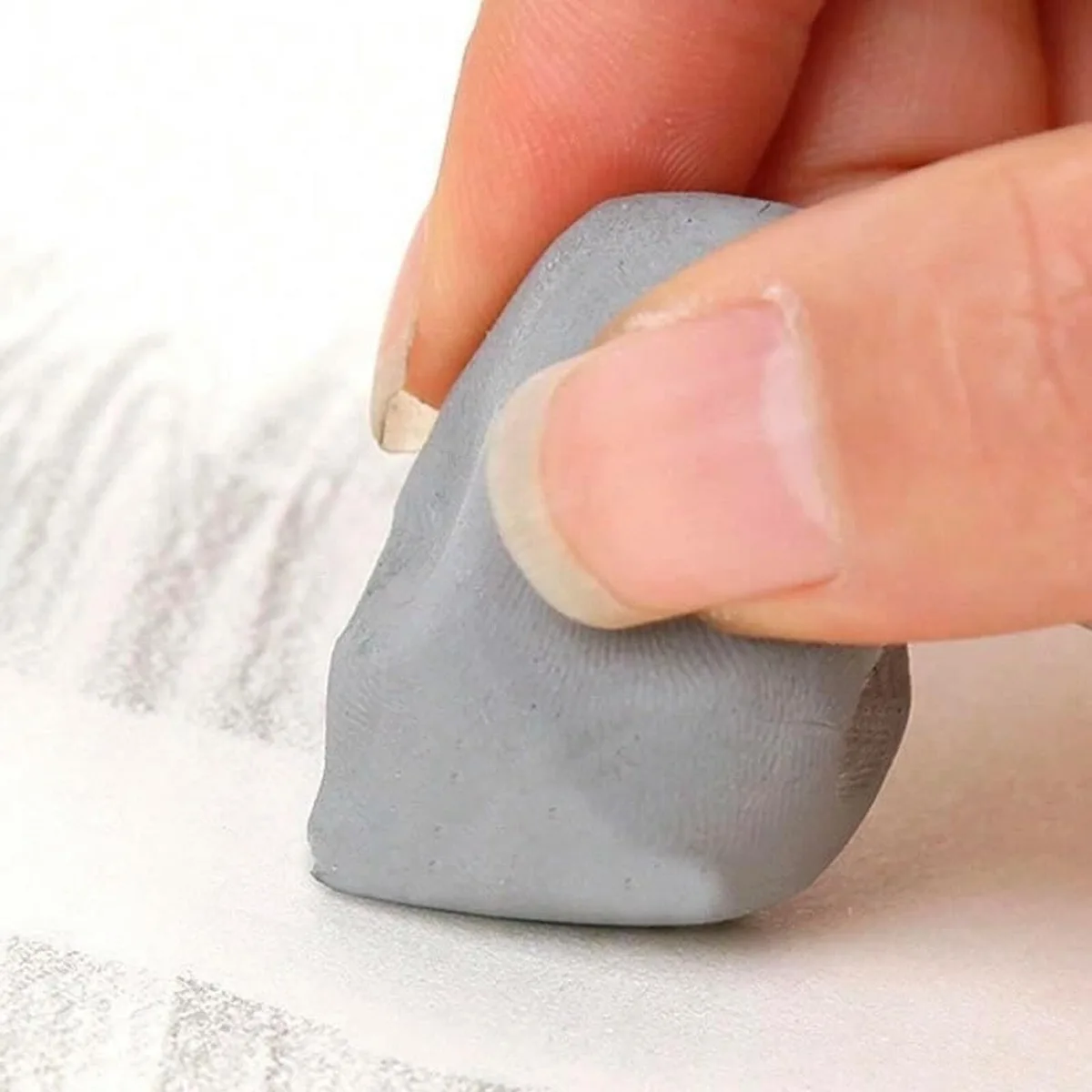
Image source: Bing (Web (fair-use with source credit))
Good erasing technique prevents paper damage and ghosting. Start by securing your paper flat against a hard surface. Place one hand near the area you want to fix to keep the sheet from buckling.
Hold your vinyl eraser at a slight angle rather than pressing flat down.
Use short, consistent strokes moving in one direction. Avoid aggressive back-and-forth scrubbing that generates friction heat and tears delicate paper fibers. If you are cleaning up technical illustrations, consider upgrading your drawing setup by checking out our breakdown of top-rated pencils for artists.
Brush away the resulting rubber crumbs with a soft drafting brush or the edge of your hand. Never blow debris across wet ink or fresh graphite marks. For stubborn dark spots, press a kneaded eraser firmly against the mark and lift straight up.
This blotting action pulls trapped graphite out of the paper grain without abrading the surface.
Common Erasing Mistakes That Ruin Your Work
Applying excessive downward pressure while writing creates deep grooves in the paper. Once paper fibers crush down, no eraser reaches the graphite trapped at the bottom. Keep your hand relaxed when writing to keep lines resting on top of the sheet.
For specialized drafting projects, picking up the right gear from our recommended list of top-tier student pencils prevents hand fatigue and heavy-handed writing habits.
Another common error involves using dirty erasers. Rubbing a graphite-stained eraser back and forth across your notes transfers fresh pigment right onto clean paper. Clean your eraser blocks by rubbing them on a scrap piece of clean paper until the surface looks fresh again.
Avoid wetting your eraser unless you are using specific ink-erasing compounds.
Moisture turns graphite dust into a permanent gray stain that binds directly to cellulose fibers. Let your hands stay dry and keep your tools clean for optimal correction results every single time. Academic testing guidelines from the National Institute of Standards and Technology emphasize that surface contamination ruins abrasive efficiency.
Keeping your erasers pristine maintains their abrasive friction coefficient.
Frequently Asked Questions About Mechanical Pencil Lead and Erasers
Why does my mechanical pencil leave gray smudges when I erase?
Mechanical pencil leads contain polymer binders that grip paper fibers tightly. Standard rubber erasers often push fine graphite particles deeper into the paper grain instead of lifting them out. Upgrading to a polymer block eraser or a kneaded putty tool solves this problem by lifting the pigment cleanly.
Can you erase 0.3mm lead completely?
Yes, but 0.3mm lead concentrates immense writing pressure onto a tiny surface area. That pressure gouges delicate paper fibers, trapping graphite deep within the grooves. Using a lighter hand pressure and a precision pen-style eraser lets you clean up these thin lines without tearing your paper.
Do plastic erasers work better than pink rubber ones?
Plastic and vinyl erasers outperform traditional rubber blocks on synthetic graphite blends. Rubber erasers harden over time and tend to smear pigment across the page. Vinyl erasers shed microscopic crumbs that absorb graphite dust away from the paper surface.
What is the best eraser for delicate sketchbook paper?
Kneaded erasers work best on textured sketchbook paper because they do not abrade the surface fibers. You mold them into custom shapes to dab at stray lines without shedding rubber debris. This blotting action pulls trapped graphite out of the paper grain safely.
How do I clean a dirty eraser without ruining it?
Rub the contaminated eraser firmly against a clean scrap sheet of heavy printer paper until the dark buildup rubs away. Exposing fresh compound restores the abrasive edges needed for clean corrections. Discard erasers that remain stained through their core.