What Is the Best Lead Size for a Mechanical Pencil?
Finding the best lead size for a mechanical pencil often feels like a minor detail until your lines start snapping or your handwriting turns into an unreadable smudge. The right diameter balances durability and precision, keeping your notes clean and your workflow smooth.
Manufacturer specifications indicate that standard graphite diameters range from ultrathin 0.3mm variants up to sturdy 0.9mm options, with each size built for specific tasks. Let us break down how to choose the ideal width for your daily writing and sketching needs as of 2026.
Quick Answer
What is the best lead size for a mechanical pencil? The 0.5mm size fits standard writing best. The 0.7mm size offers superior durability for heavy hands.
Choose 0.3mm for tiny script or dense technical drawings. Select 0.9mm for bold lines and rough sketching. Match your choice to paper texture and writing pressure.
Why Finding the Right Mechanical Pencil Lead Size Matters
Your choice of lead diameter dictates how your notes look on the page. Thin leads create sharp lines for tiny handwriting. Thick leads resist snapping when you press down hard.
Aggregate reviews report that users frequently abandon pencils that break too often. Selecting the correct size stops constant interruptions during long study sessions.
Paper texture also plays a massive role in your everyday experience. Rough paper grinds down thin graphite quickly. Smooth paper works well with almost any diameter you pick.
Students often look for top-rated student writing tools to keep up with fast-paced lectures. Matching your natural pressure to the right graphite width prevents scratched pages.
The Contenders: A Closer Look at Common Lead Sizes
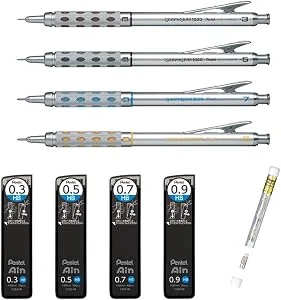
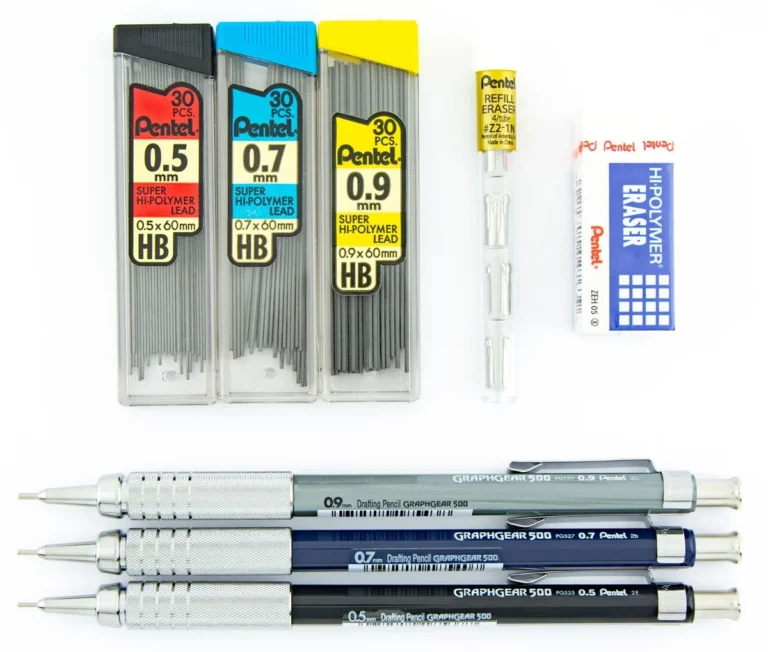
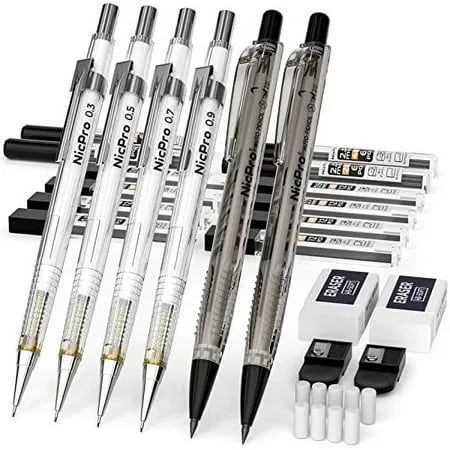
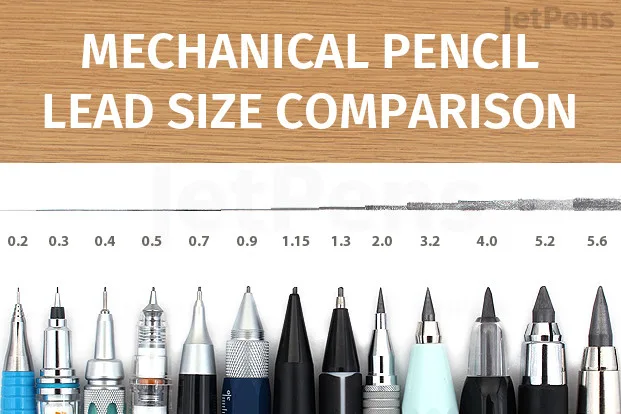
Mechanical pencil leads come in four primary diameters for everyday writing. Each variant serves a distinct purpose in the stationery world.
The 0.3mm size targets extreme precision and tiny margin notes. The 0.5mm size acts as the standard choice for drafting and general writing.
The 0.7mm size provides a forgiving balance for everyday note-taking. The 0.9mm size delivers bold lines that resist breakage under heavy pressure.
Technical standards from organizations like the International Organization for Standardization (ISO) govern these exact measurements. Knowing your options helps you find a reliable machine for your specific workflow.
Head-to-Head: Comparing 0.3mm, 0.5mm, 0.7mm, and 0.9mm
| Lead Size | Best For | Breakage Risk | Line Width |
|---|---|---|---|
| 0.3mm | Micro-script, drafting | High | Hairline |
| 0.5mm | Standard notes, math | Medium | Fine |
| 0.7mm | Universal writing, fast notes | Low | Medium |
| 0.9mm | Bold strokes, heavy pressure | Minimal | Thick |
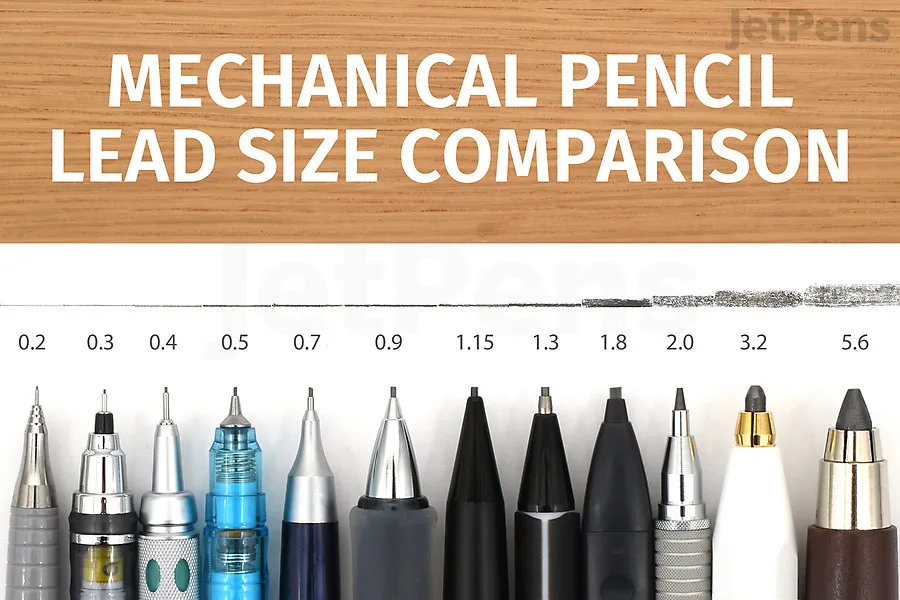
Comparing these four sizes highlights trade-offs in precision and durability. The 0.3mm option demands a light touch to prevent constant snapping.
The 0.5mm size hits the sweet spot for clean math equations. Students studying engineering often prefer our favourite picks for detailed schematic work.
The 0.7mm variant tolerates hurried writing without gouging the paper. The 0.9mm version feels closer to a traditional wooden pencil.
Which Lead Size Fits Your Handwriting and Drawing Style
Your physical handwriting style dictates which lead diameter works best. Heavy-handed writers snap thin leads instantly.
If you write with a light touch, 0.5mm provides crisp legibility. Artists sketching fine details often lean toward smaller diameters.
Drafters working on blueprints rely on consistent line weights. Students writing fast cursive benefit from the forgiving nature of thicker graphite.
Testing different sizes helps you find what feels natural. Comfort keeps your hand from cramping during long writing sessions.
Common Mistakes That Cause Lead Breakage and Frustration
Many users blame the pencil when graphite snaps repeatedly. Extending the lead too far out of the metal sleeve is the main culprit.
Keeping only a millimeter of graphite exposed prevents most breaks. Pressing down too hard with a thin lead causes instant failure.
Using cheap, low-grade polymer leads leads to internal jamming. Buying quality graphite ensures smooth advancement through the clutch mechanism.
Storing your pencil properly protects the internal guide tube. Fixing a jam requires clearing the tip with a cleaning pin carefully.
Expert Tips for Matching Lead Hardness to Your Choice of Size
Matching your lead diameter with the correct graphite grade changes how your writing feels on the page. Harder leads leave lighter, cleaner lines that resist smudging. Softer leads deposit rich, dark graphite that requires minimal pressure.
The standard HB grade offers a balanced middle ground for everyday notes. If you prefer a darker line without moving up in diameter, switch from HB to a B or 2B grade.
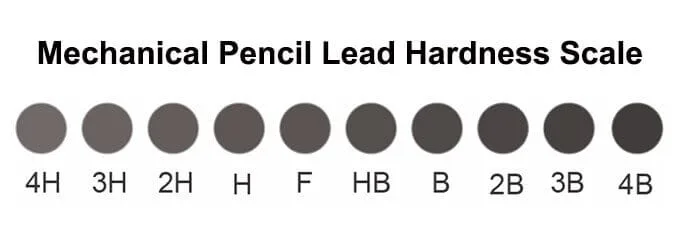
Artists and draftsmen rely on specific hardness ratings to control contrast and shading. Technical guidelines from the National Institute of Standards and Technology note that material composition dictates how smoothly graphite glides across cellulose fibers.
Pairing a 0.3mm pencil with a hard 2H lead gives you ultra-sharp architectural lines. Pairing a 0.7mm pencil with a soft 2B lead gives you bold, expressive strokes for rapid journaling.
Frequently Asked Questions About Mechanical Pencil Leads
Which mechanical pencil lead size is best for everyday writing?
The 0.5mm and 0.7mm sizes suit everyday writing best. Choose 0.5mm for neat, compact handwriting. Choose 0.7mm if you prefer a slightly bolder line that tolerates heavier hand pressure without snapping.
Can I put any lead size into any mechanical pencil?
You must match your lead size to the specific internal mechanism of your pencil. A 0.5mm pencil only accepts 0.5mm lead. Trying to force a larger lead into a smaller tip causes immediate jams.
Why does my mechanical pencil lead keep breaking?
Lead breakage usually happens because you extend too much graphite out of the metal sleeve. Keep only one millimeter exposed while writing. Pressing down too hard with thin 0.3mm graphite also causes snapping.
What is the difference between HB and 2B lead?
HB graphite provides a standard, medium-dark line with moderate durability. The 2B grade contains more soft binder material, leaving a much darker mark that smudges more easily under your hand.
How do I clear a lead jam inside my pencil?
Remove the eraser cap and pull out any loose graphite sticks from the storage chamber. Insert the thin metal cleaning pin that comes with your pencil down through the tip to push out broken fragments.
The Verdict: Choosing Your Everyday Lead Size
Selecting your ideal lead diameter comes down to your personal writing pressure and paper choice. Students and office workers find that 0.5mm or 0.7mm handles daily tasks with ease.
Technical drawers and micro-writers benefit from the extreme precision of 0.3mm graphite. Heavy-handed writers and sketchers appreciate the durability of 0.9mm options.
Experiment with a couple of different widths to see what feels comfortable for your hand. Once you find your preferred size, you can stock up on matching polymer leads and enjoy smooth, uninterrupted writing.