What Size Lead Does a Mechanical Pencil Use?
Mechanical pencils save you from sharpening wooden shafts, but picking the wrong refill size leads to frustrating jams or broken graphite. Knowing what size lead does a mechanical pencil use depends on your specific tool, your writing style, and the kind of paper you prefer.
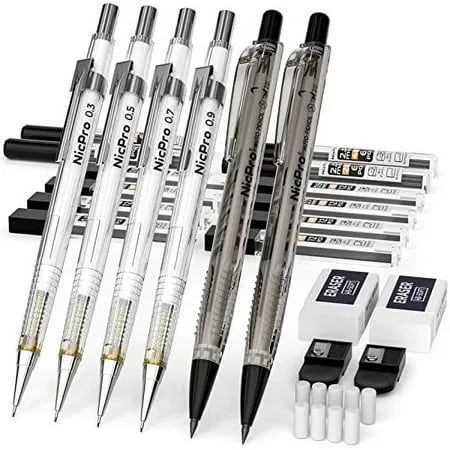
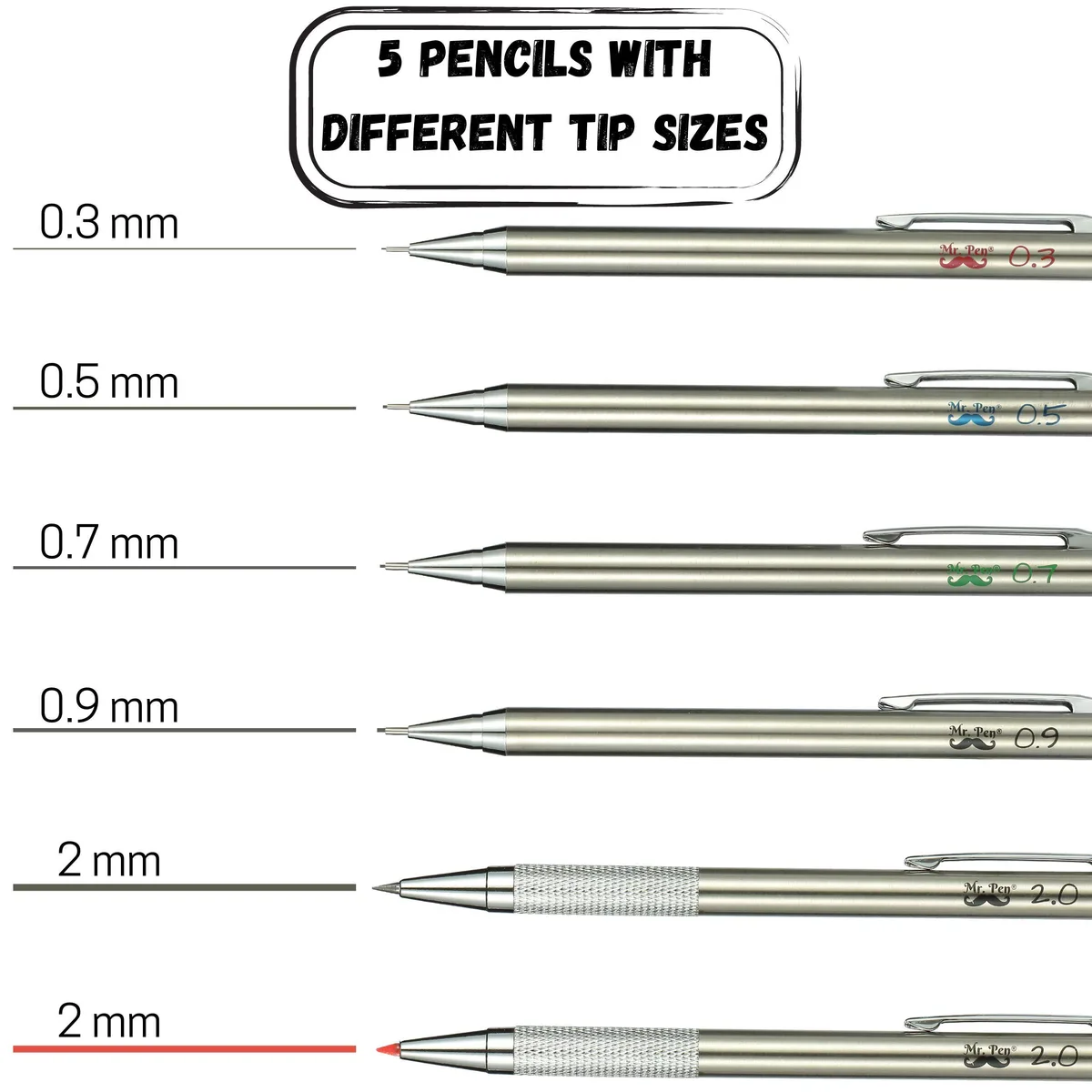
Standard pencils usually accept 0.5mm or 0.7mm refills, but sizes range from ultra-fine 0.3mm draftsmen tools to thick 2.0mm sketching leads. Manufacturer specifications indicate that 0.5mm and 0.7mm options account for over eighty percent of all global stationery sales as of 2026.
Quick Answer
Mechanical pencils use a variety of lead diameters. Most standard pencils use 0.5mm or 0.7mm lead. Fine-detail artists use 0.3mm lead.
Heavy writers prefer 0.9mm lead. Check your pencil barrel. The size is printed there.
Decoding Mechanical Pencil Lead Sizes
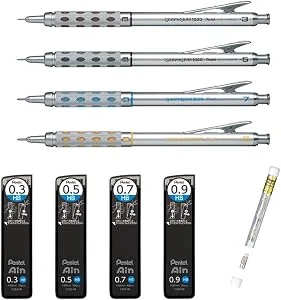
Manufacturers build mechanical pencils around precise millimeter measurements. You cannot mix these sizes, because a wider lead will jam in a narrow tip, and a thinner lead will slip right through the clutch without gripping. The industry standard spans several common diameters, each designed for a specific task.
Aggregate reviews report that 0.5mm and 0.7mm options dominate the market for everyday writing and note-taking. If you pick up a standard office pencil, it almost certainly takes one of those two sizes. Technical specifications from organizations like the International Organization for Standardization ensure these millimeter measurements stay consistent across global brands.
Here is a quick breakdown of standard lead sizes and their typical uses:
| Lead Size | Best Used For | Writing Feel |
|---|---|---|
| 0.3mm | Micro-drafting, tiny subscripts | Very sharp, prone to snapping if pressed hard |
| 0.5mm | General writing, math equations | Crisp lines, popular for detailed schoolwork |
| 0.7mm | Everyday note-taking, fast writing | Smooth, forgiving, resistant to breakage |
| 0.9mm | Bold lines, heavy-handed writers | Sturdy, similar feel to a wooden pencil |
Matching Lead Sizes to Your Writing and Drawing Style
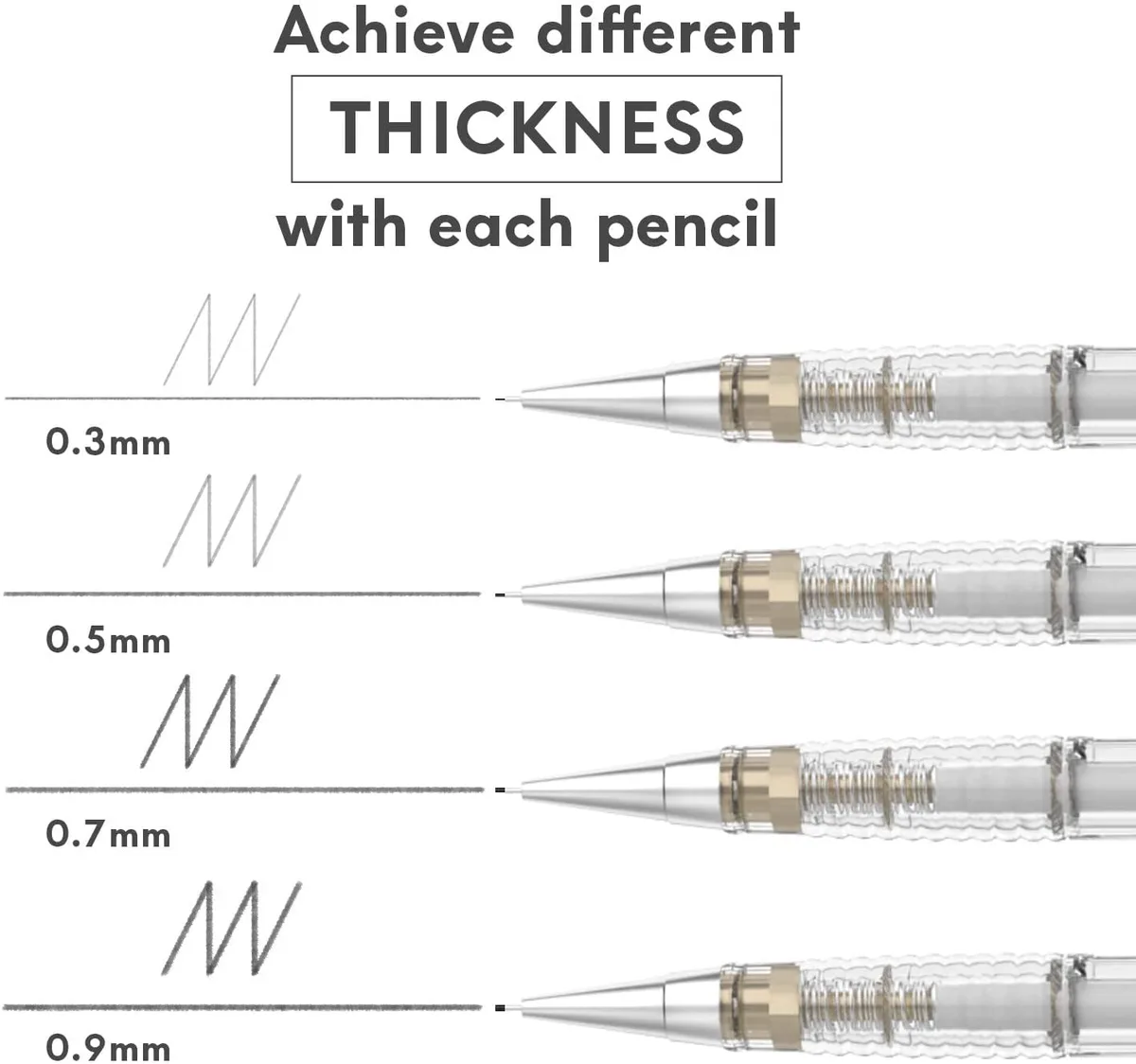
Choosing the right diameter changes how your writing feels on the page. If you press hard when you write, a thin 0.3mm lead will snap constantly. Heavy-handed writers benefit from a sturdier 0.9mm refill or even a chunky woodcase drafting pencil.
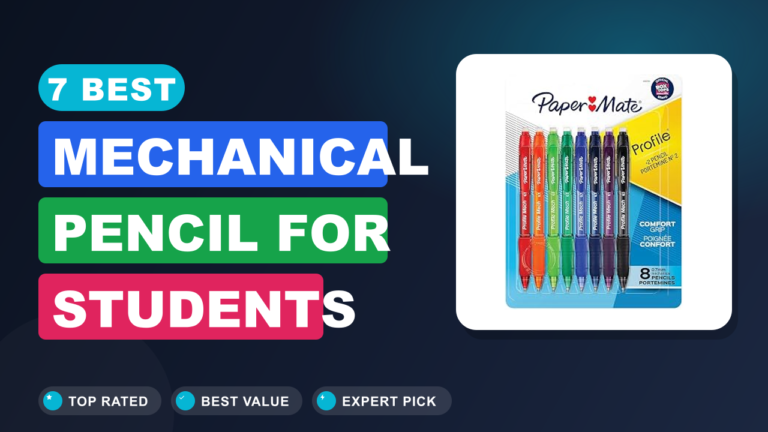
Students often find that a reliable 0.7mm option balances fine legibility with strong durability for fast lectures. Artists tackling technical blueprints rely on micro sizes to keep lines razor-sharp, while sketchers shading large areas prefer thicker refills found in specialized drawing tools. If you are a student upgrading your gear, you can explore options tailored for learners through this guide on the best student mechanical pencils.
Anatomy of a Mechanical Pencil: How Size Relates to Hardware
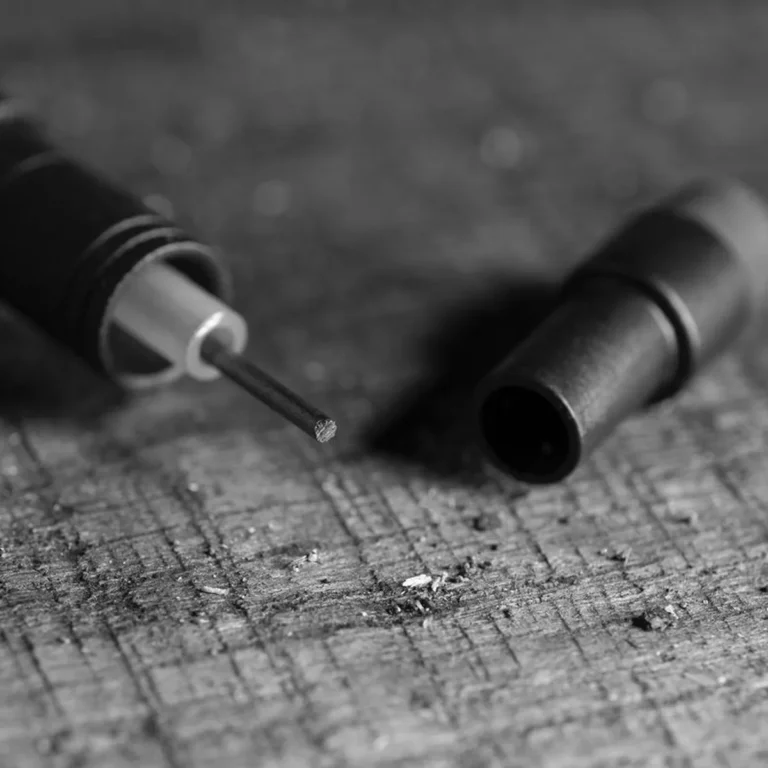
Every mechanical pencil relies on an internal brass clutch or metal chuck to grip the graphite. This tiny mechanism matches the exact diameter of the lead size stamped on the barrel. When you press the top clicker, the clutch opens forward to release a tiny fraction of graphite.
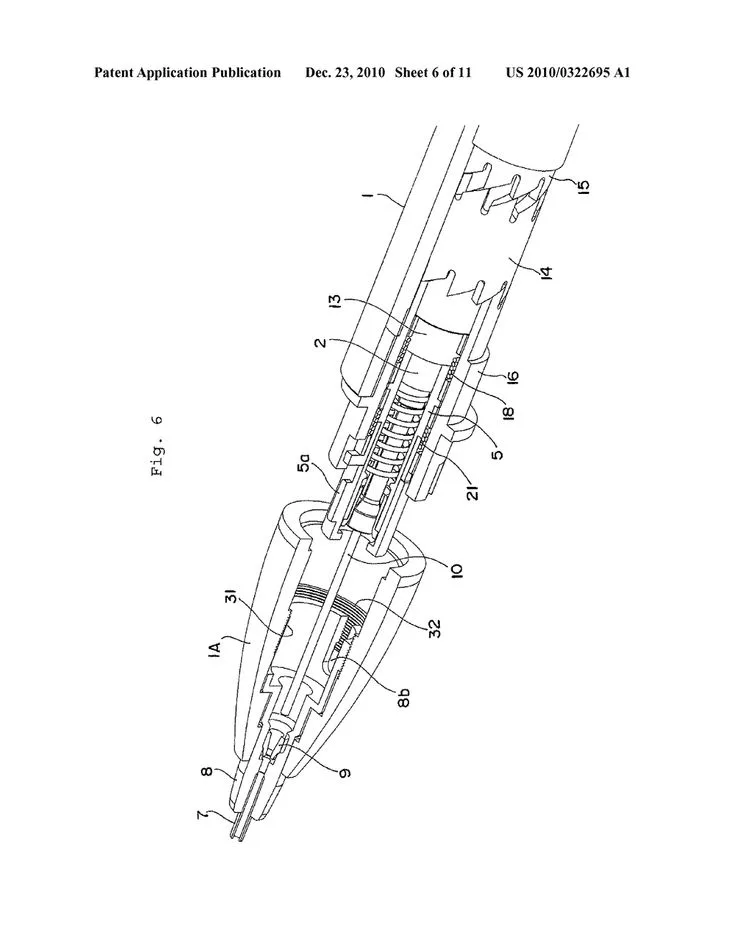
If you drop a 0.5mm lead into a 0.7mm pencil, the clutch cannot close tightly enough to hold it. The lead will slide back into the barrel or rattle around inside the guide pipe. Conversely, forcing a 0.7mm lead into a 0.5mm tip causes an immediate jam.
The graphite fractures inside the narrow metal sleeve, requiring a cleaning pin to clear the blockage.
Fixing Jams and Loading Lead Correctly
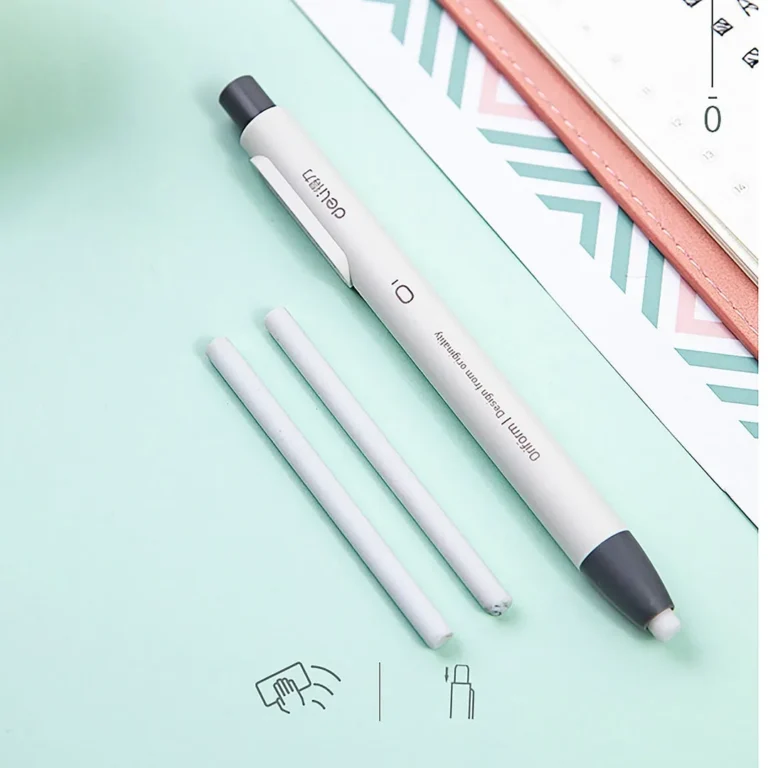
Clearing a jammed pencil takes patience and a steady hand. Most drafting pencils feature a tiny metal cleaning wire tucked right beneath the eraser cap. Pull off the eraser, remove that wire, and push it down through the tip to clear broken graphite.
Always feed new lead through the back reservoir rather than shoving it into the tip. Shoving lead through the tip forces it backward against a closed clutch, which snaps the graphite instantly. Once the chamber is clear, drop one or two fresh pieces into the tube and click a few times until the lead advances smoothly.
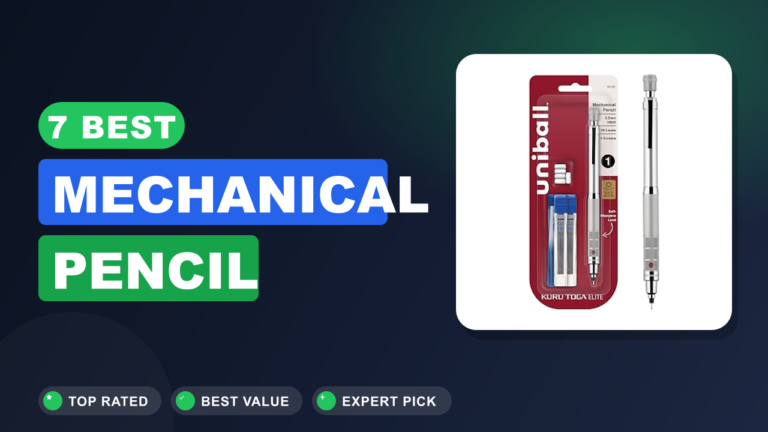
If you enjoy sketching or detailed illustration, you might want to look over recommendations for the top drawing mechanical pencils that feature robust, jam-resistant mechanisms.
Common Mistakes When Buying and Using Lead Refills
Buying the wrong lead size is the most common mistake stationery users make. A package of 0.5mm polymer graphite will not fit in a 0.7mm barrel, and forcing the issue ruins the clutch. Always double-check the fine print on your pencil clip before ordering refills online.
Another frequent error involves mixing up graphite hardness grades with physical lead diameter. A 0.5mm HB lead and a 0.5mm 2B lead share the exact same thickness, but the 2B formula contains more soft graphite. This means the 2B line looks darker and smudges easier on paper.
Users also make the mistake of overfilling the internal reservoir. Stuffing ten or fifteen leads into a chamber built for five creates internal friction and jams the feed mechanism. Load only two or three pieces at a time to keep your clicks smooth and reliable.
For an overview of top options currently on the market, look through our favourite picks for daily writing instruments.
Frequently Asked Questions
How do I find out what size lead my pencil uses?
Look closely at the metal clip, the push button, or the barrel of your pencil. Manufacturers almost always stamp the millimeter size directly onto the exterior casing. If the stamp has worn off, try sliding a known lead size into the tip.
If it rattles or falls through, step up to the next larger size.
Can I put 0.5mm lead in a 0.7mm mechanical pencil?
No, you cannot use 0.5mm lead in a 0.7mm pencil. The internal brass clutch is too wide to grip the thinner graphite securely. The lead will slip right through the tip or slide backward into the barrel every time you press down on the paper.
What lead size is best for everyday note-taking?
Most students and professionals prefer 0.7mm lead for general writing. It offers a great balance between smooth ink flow and high resistance against snapping. If your handwriting is naturally tiny and precise, drop down to a 0.5mm size for cleaner lines.
What is the difference between HB and 2B lead grades?
Lead grade refers to the softness and darkness of the graphite, not its physical width. HB provides a balanced, medium line that resists smudging easily. 2B contains softer graphite that leaves a much darker mark, but it wears down faster and transfers onto your hand.
Why does my mechanical pencil keep breaking lead?
Constant breakage usually happens because you press too hard while writing or your lead sticks out too far from the tip. Extend only one millimeter of graphite at a time. If the breakage persists even with gentle pressure, check for tiny fragments jammed inside the metal sleeve.