Can You Use Different Lead Sizes in a Mechanical Pencil?
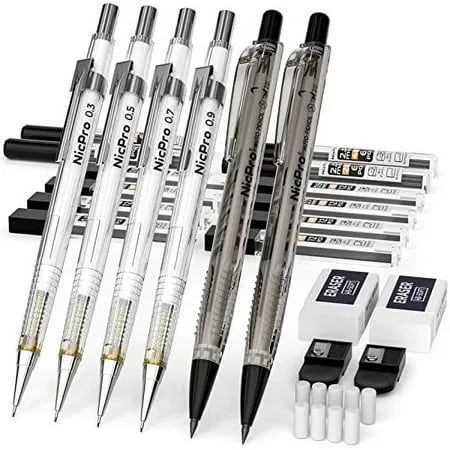
If you've ever tried to force a 0.7mm graphite stick into a fine 0.5mm writing instrument, you know the instant frustration of a jam. The core question of whether you can use different lead sizes in a mechanical pencil comes down to strict internal tolerances.
Every writing instrument relies on exact millimeter dimensions to feed and grip the graphite core. As of 2026, manufacturing standards remain rigid, meaning you cannot mix and match sizes across standard barrels.
Quick Answer
Can you use different lead sizes in a mechanical pencil? No, you cannot. Internal parts fit only one diameter.
The clutch mechanism and tip sleeve match that exact size. Changing sizes causes jams or loose graphite.
The Anatomy of a Mechanical Pencil: Why Size Tolerances Matter
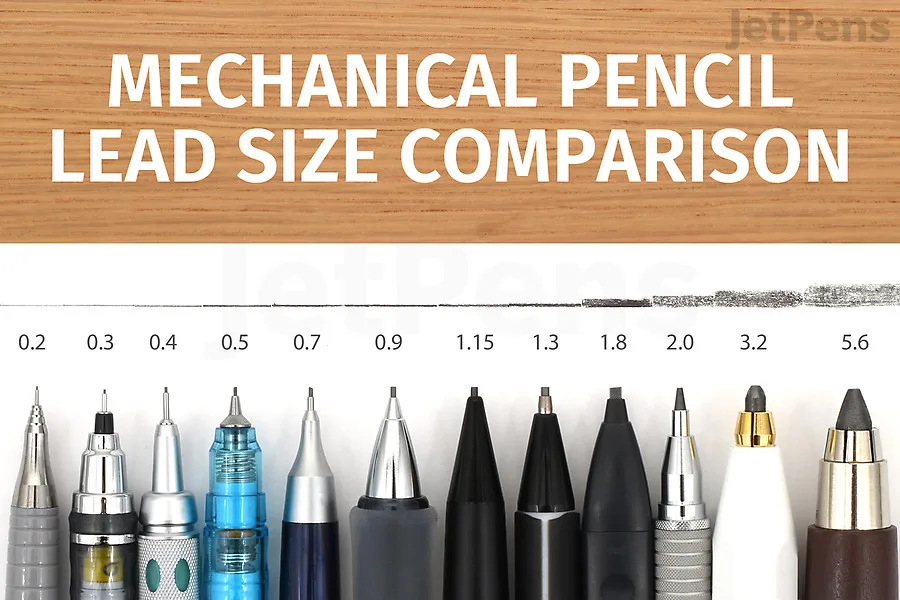
Understanding the internal architecture of your writing tool reveals why swapping components fails. Manufacturer specifications confirm that each barrel houses a precision-machined brass clutch and a steel guide pipe built around a singular millimeter spec. When you click the top button, the internal jaws open just enough to let gravity drop the graphite forward by a fraction of a millimeter.
If you want a reliable tool for everyday notes, choosing one of the top-rated student writing instruments ensures your refills match the factory tolerances. That brass clutch acts as a tiny vise. It cannot adjust its grip pressure for a thinner or thicker cylinder.
If the graphite is too narrow, the jaws slide right over it without catching. If the graphite is too wide, the jaws cannot close at all.
What Happens When You Try Mixing Lead Sizes
Forcing incompatible graphite into a barrel creates immediate mechanical failure. When you drop an undersized graphite rod into a wider chamber, it often rattles around inside the magazine tube. It might bypass the clutch entirely and tumble out through the front tip.
If it manages to catch, the lack of friction means the graphite pushes back inside the barrel the moment you press it against the paper.
Going the other way is even worse. Trying to load a thicker graphite rod into a finer tip results in a stubborn blockage. The oversized material gets wedged halfway down the metal guide pipe.
You will likely need a thin wire cleaning pin to clear the obstruction. Many artists using precise tools for detailed sketching keep strict separation between their refill cases to avoid this exact headache.
Size-by-Size Breakdown: From 0.3mm to 2.0mm Lead Holders
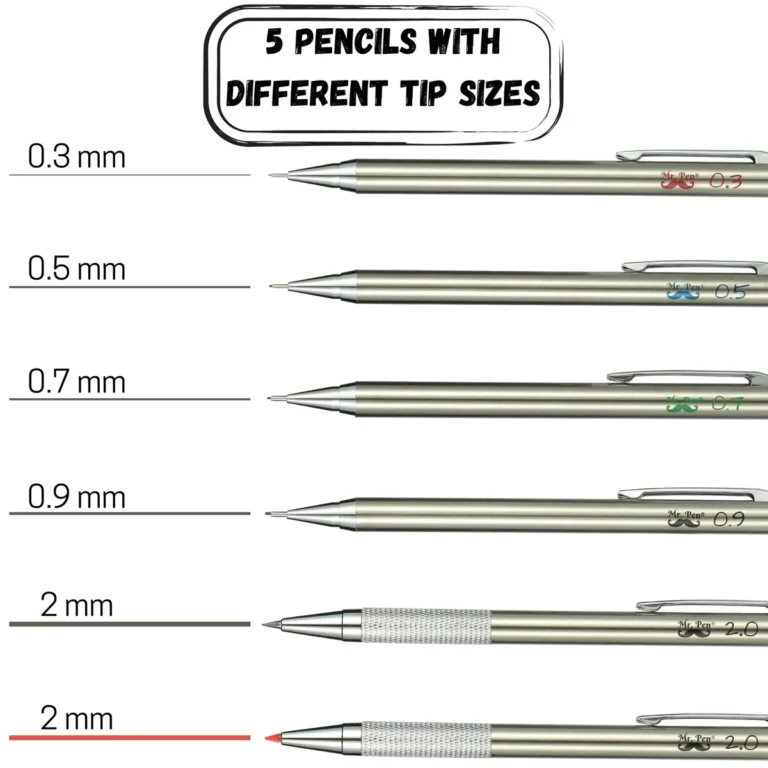
Different sizes serve distinct purposes, and their internal parts do not cross over. Standard sizes range from ultra-fine technical drafts down to thick artist leads.
| Pencil Size | Primary Use Case | Compatible Refill Size | Interchangeable? |
|---|---|---|---|
| 0.3mm | Fine technical drawing | Exactly 0.3mm | No |
| 0.5mm | Standard writing | Exactly 0.5mm | No |
| 0.7mm | General note-taking | Exactly 0.7mm | No |
| 0.9mm | Heavy pressure writing | Exactly 0.9mm | No |
| 2.0mm | Drafting and sketching | Exactly 2.0mm | No |
Each tier occupies a dedicated niche in technical drawing and writing standards overseen by organizations like the International Organization for Standardization. You cannot substitute a 0.5mm core into a 0.7mm mechanism, nor can you reverse the process. Every single diameter requires its own dedicated container of matching graphite refills.
Built-In Exceptions: When Swapping Lead Sizes Actually Works
While you cannot mix sizes inside a standard pencil, a few specialized categories bend the rules slightly. Clutch pencils, often called lead holders, operate on a completely different mechanical principle than traditional fine-line click pencils. These heavier instruments use a heavy-duty metal jaw that opens wide to accept a thick 2.0mm graphite core.
Within the 2.0mm category, you can usually swap between different brands of graphite without issue. The wide jaws do not rely on precise millimeter micro-tolerances to grip the material. Some drafting professionals upgrade to an advanced everyday writing tool that features interchangeable modular tips, though these remain rare specialty items rather than standard office supplies.
How to Check Your Pencil's Exact Size Requirements
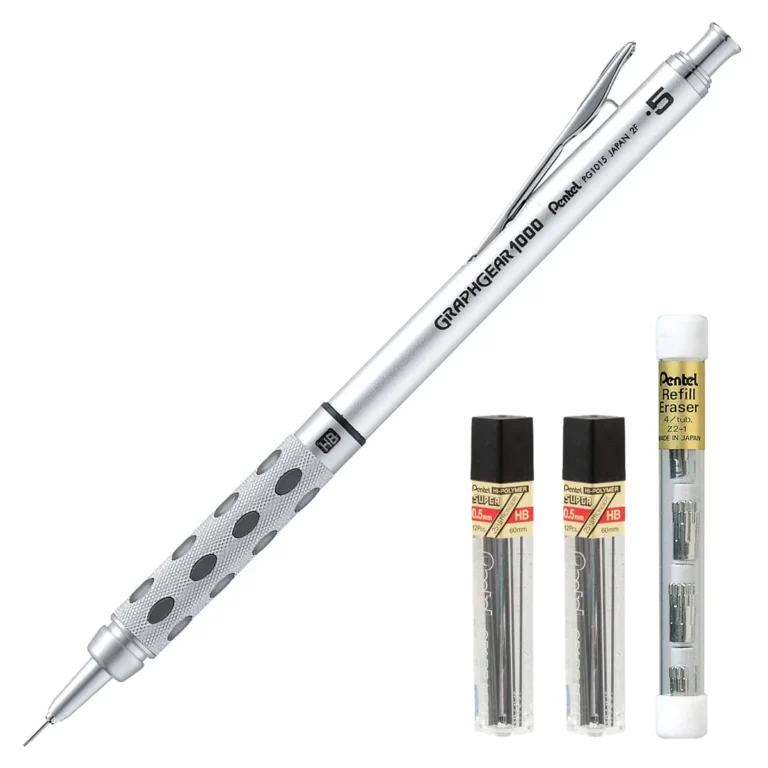
Finding the right refill size takes just a few seconds if you know where to look. Most manufacturers stamp the millimeter rating directly onto the metal pocket clip or the plastic barrel near the grip section. If daily wear rubs those numbers off, check the metal band right beneath the eraser cap.
When all external markings have faded away, you can measure an old piece of remaining graphite with digital calipers. Alternatively, test spare refills by dropping them into the front tip without clicking the top button. If the graphite slides completely through the metal guide pipe, the pencil is built for a larger size.
If it sits snugly at the tip opening without falling inside, you have found the correct match.
Troubleshooting Jams and Slipped Lead
Clearing a graphite jam requires patience and a steady hand to avoid bending the delicate internal sleeve. Start by removing the eraser and pulling out any loose sticks stored in the magazine tube. If a broken piece is wedged inside the front tip, push the metal cleaning pin through from the rear opening to push the blockage out.
Never force a sewing needle or a thick wire into the front tip of the pencil. Doing so can widen the brass guide pipe or scratch the internal clutch, rendering the instrument permanently unusable. Once the obstruction clears, tap the barrel gently to shake out any graphite dust before loading fresh matching leads.
Frequently Asked Questions About Mechanical Pencil Leads
Can I use 0.5mm lead in a 0.7mm mechanical pencil?
No, a 0.5mm lead is too narrow for a 0.7mm pencil. It will either fall straight through the front metal tip or fail to catch in the internal clutch mechanism.
What happens if I force a thick lead into a small pencil?
An oversized lead will get stuck inside the metal guide pipe or jam the internal jaws. This creates an immediate blockage that usually requires a cleaning pin to fix.
Are all brands of the same lead size interchangeable?
Yes, standard graphite refills of the same millimeter rating work across different brands. A 0.7mm refill from one manufacturer fits any standard 0.7mm barrel.
How do I know what size lead my mechanical pencil takes?
Check the metal pocket clip, the barrel printing, or the metal band under the eraser cap. Manufacturers almost always stamp the exact millimeter size in one of these locations.
Do 2.0mm lead holders work like regular mechanical pencils?
No, 2.0mm lead holders use a heavy-duty drop clutch instead of a ratcheting feed mechanism. They hold thicker graphite blocks meant for artistic sketching and technical layout work.