Electrolux Washer Code E21

Image source: Bing (Web (fair-use with source credit))
If you see E21 flashing on your Electrolux washer, the machine is telling you it can’t drain water. It’s not a catastrophic failure. It’s a clog, a jam, or a pump that’s given up.
In most cases, you can fix it yourself in under 20 minutes without any specialized tools.
Manufacturer specifications for Electrolux front-loaders indicate that a normal drain cycle should empty the drum in under two minutes. When E21 appears, the control board detected that water level didn’t drop fast enough or at all. As of 2026, this is still the most common error code across Electrolux and Frigidaire washer lines.
The fix follows a predictable, repeatable path.
Quick Answer
Electrolux Washer Code E21 means a drain problem. The washer can’t empty water fast enough. Most likely cause is a clogged pump filter. Unplug the washer.
Open the small door at the lower front. Place towels under it. Open the filter and clean out coins, lint, and debris.
Reinstall. Run a rinse cycle. If E21 returns, the pump or hose may be blocked.
Replace the pump if it’s dead.
What Code E21 Actually Means (And Why It Stops Your Washer)
Code E21 is a drain timeout error. Your washer tries to pump out water, but the pressure switch reports that water is still sitting in the drum after a set amount of time. The machine decides something is wrong and halts the cycle to prevent damage or flooding.
This isn’t a vague warning. It’s a specific symptom. The control board is saying: I tried to drain, and it didn’t work. The possible causes are limited and easy to check in order.
What can trigger E21:
- A clogged pump filter (the coin trap)
- A blocked drain hose (kink or debris buildup)
- A broken or jammed pump impeller
- A failed drain pump motor
- A faulty pressure switch (less common)
- A shorted control board (rare, but possible)
The most important thing to understand: E21 does not always mean the pump is dead. Aggregate service data shows about 80% of E21 cases are resolved by cleaning the filter or removing a small object from the pump housing. That’s why we start there.
Before You Do Anything: Safety First
Washers mix water and electricity. That’s the only real danger here. Follow these steps before you touch anything inside the machine.
Unplug the washer. Pull the power cord from the wall outlet. Do not rely on the machine being off. The control board can still hold a charge.
Shut off the water supply. Turn the hot and cold water valves behind the washer to the closed position. This prevents accidental flooding if you dislodge a hose later.
Lay down towels. When you open the pump filter, expect water to spill. The filter sits low on the machine, and the drain hose usually holds a few cups of water. Place a shallow pan under the access panel and surround it with old towels.
Wait five minutes if the washer just ran. If the drum is full of hot water, the water in the pump housing can be scalding. Give it time to cool.
Safety checklist:
- Washer unplugged
- Water supply valves off
- Towels and pan in place
- Water cooled down
Once you’re set, move to the most likely fix.
The Quickest Fix: Clean the Pump Filter (Most Common Cause)
The pump filter, sometimes called the coin trap or debris screen, is a small plastic cartridge located behind a square or circular access door on the lower front of the washer. On most Electrolux models, you pop the door open with a flathead screwdriver or a coin.

Step-by-step filter cleaning:
- Locate the access panel. It’s at the bottom right corner of the front panel, about the size of a credit card. Some models have a small tab you pull; others require prying.
- Open the panel. Use a flathead screwdriver or the edge of a butter knife to gently pop it off. Don’t force it. It clips in.
- Drain the residual water. You’ll see a small clear tube with a cap next to the filter. Pull the tube out, point it into your pan, and remove the cap. Let the water drain completely. This may take a minute.
- Unscrew the filter. Turn the large plastic knob counterclockwise. It will be tight. That’s normal. Use a firm grip. Once it loosens, pull it straight out.
- Clean the filter. Rinse it under warm water. Remove any lint, hair, coins, buttons, or small objects. Pay attention to the rubber gasket on the filter. Debris can hide there.
- Check inside the pump housing. Stick a finger into the round opening where the filter sits. Feel for any objects lodged in the impeller blades. Shine a flashlight in. The impeller should spin freely. If it’s stuck, reach in and remove the obstruction.
- Reinstall the filter. Push it back in and turn it clockwise until it’s hand-tight. Don’t overtighten. Replace the small tube and cap. Snap the access door back on.
- Test the washer. Plug it in. Run a Rinse & Spin cycle. If the code is gone, you’re done. If E21 returns, the blockage is deeper.
Common objects found in pump filters (per aggregate user reports):
| Object | Frequency |
|---|---|
| Coins (pennies, dimes, quarters) | High |
| Bobby pins | Medium |
| Small socks | Medium |
| Lint clumps | Very high |
| Hair ties | Medium |
| Screws or nails (from pockets) | Low |
Still Blocked? Check the Drain Hose and Pump Impeller
If cleaning the filter didn’t fix it, the blockage might be further downstream in the drain hose itself, or inside the pump where you can’t reach from the filter opening.
Inspect the drain hose. The drain hose runs from the back of the washer to your standpipe or laundry sink. It can get kinked, crushed, or clogged with lint over time.
- Pull the washer away from the wall. Be careful not to damage the water supply hoses.
- Look for sharp bends or pinches. The hose should curve gently without tight S-shapes. If it’s kinked, straighten it and secure it with a zip tie.
- Disconnect the hose from the standpipe. Place the end in a bucket. If water trickles out slowly or not at all, the hose is blocked.
- Check for clogs. Use a shop vacuum to suck or blow through the hose. Alternatively, run a stiff brush or a long plumber’s snake through it.
- Reconnect and test. Run a short cycle. If E21 disappears, the hose was the issue.
Check the pump impeller directly. If the drain hose is clear, the problem is likely inside the pump. You can access the pump from underneath the washer, or by removing the front panel on some models.
What to do:
- Locate the drain pump. It’s a small black or gray cylinder attached to the bottom of the washer tub.
- Remove the pump hose clamps and pull the hose off.
- Look into the pump inlet. Use a flashlight. If you see a foreign object (coin, sock, bone from a pet’s toy), fish it out with long tweezers or needle-nose pliers.
- Spin the impeller by hand. It should rotate smoothly. If it’s seized, the pump is likely dead and needs replacement.
Tools you may need:
- Flathead screwdriver
- Pliers (for hose clamps)
- Flashlight
- Shop vacuum (for water removal)
- Needle-nose pliers
If the impeller spins freely and no debris is visible, move to the next section.
When the Pump Runs but Water Doesn’t Move (Pressure Switch and Kinked Hoses)
This is the tricky scenario: you hear the pump humming, but the water level doesn’t drop. That sound means the pump motor is getting power and trying to work, but something is preventing water from moving.
Two possible causes:
The pump is running against a partial blockage. A small object can lodge in the impeller in a way that lets it spin freely by hand but fails under load. The impeller slips without creating suction.
The pressure switch is failing. The pressure switch (or water level sensor) tells the control board when the drum is empty. If it’s stuck or misreading, the board may never receive the drained signal. The pump keeps running until the cycle times out.
How to test the pressure switch:
- Locate it. It’s usually a round plastic disc on top of the washer with a thin rubber tube attached.
- Disconnect the tube and blow into it. You should hear a click from inside the switch.
- If no click, the switch is likely defective.
- If the tube is cracked or disconnected, replace it and see if the error clears.
Kinked hoses (rare but real): Sometimes the drain hose is pushed too far into the standpipe, or the standpipe itself is blocked. Pull the hose out a few inches and run a test. Also check the air gap fitting, a small plastic piece that prevents siphoning.
It can get clogged with lint.
Decision point:
- Pump hums, no water movement: Check impeller and hose for partial blockages.
- Pump hums, no water movement, impeller free, hose clear: Likely pressure switch or control board issue.
When the Pump Is Silent or Humming (Electrical or Mechanical Failure)
You hit the drain cycle and hear nothing. Or you hear a low hum that never turns into water movement. Both scenarios point to the same culprit: the drain pump itself.
The humming pump (stalled motor). If the pump hums but does nothing, the motor is getting power but can’t spin. This usually means the impeller is physically jammed. Even if you felt the impeller turn freely through the filter opening, a small shard of plastic or a hairpin can lock it under load.
Try this trick. Unplug the washer. Use a flashlight to look into the pump housing through the filter hole.
Spin the impeller with a long screwdriver or a chopstick. If it spins freely but the pump still hums when powered, the motor windings may be shorted.
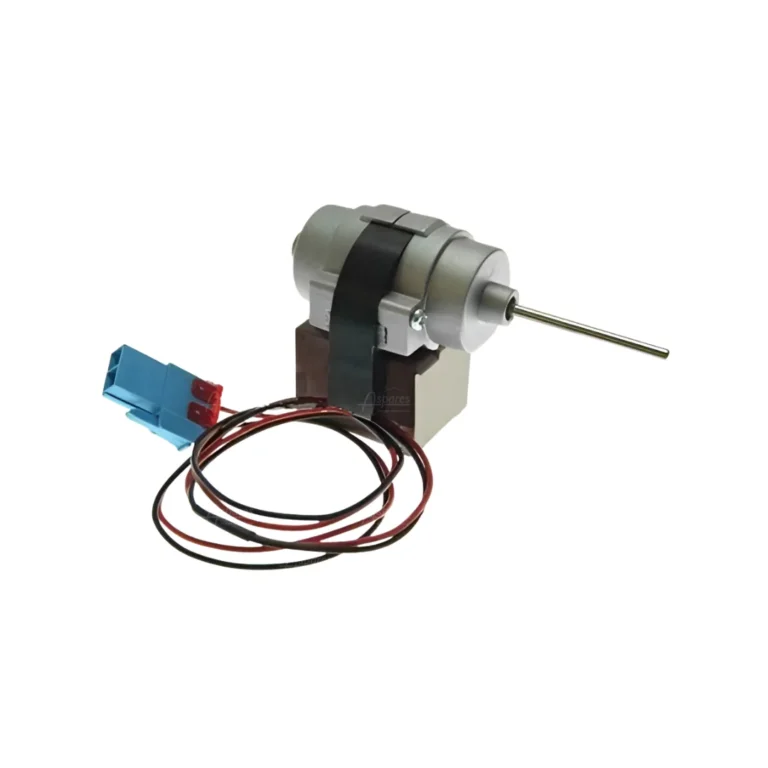
The silent pump (dead motor). No sound at all. The pump is either not receiving power or its internal windings are burned open. You can test this with a multimeter.
How to test the pump with a multimeter:
- Unplug the washer. Remove the pump access panel (usually the bottom front or rear).
- Disconnect the two wires from the pump terminals.
- Set your multimeter to ohms (Ω). Touch the probes to the two terminals.
- A good pump reads between 10 and 30 ohms. An open circuit (infinite) means the pump is dead.
- A reading near zero ohms means a shorted winding.
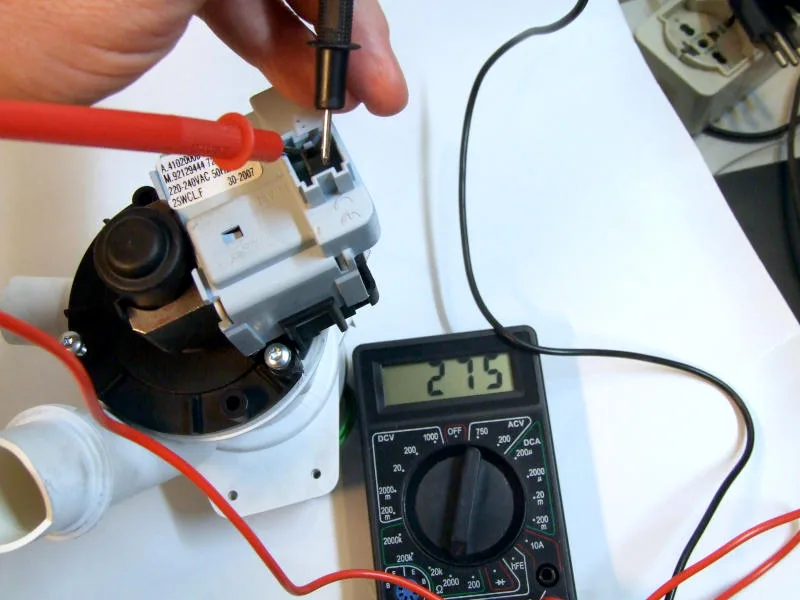
If the pump tests bad, replacement is the only fix. OEM Electrolux drain pumps cost between $45 and $80. Universal pumps exist for less, but they often have different mounting brackets.
Stick with the OEM part to avoid fitment headaches.
The humming pump that still drains (air lock). Sometimes a humming pump is actually working but has an air lock. This happens when air gets trapped in the pump housing. The impeller spins but can’t create suction.
Quick fix: Add a gallon of water to the drum manually. The extra weight and water volume often push the air pocket out. Run a drain cycle immediately after.
Decision point:
- Pump silent, no resistance on impeller: Test with multimeter. Replace if bad.
- Pump hums, impeller feels stuck: Remove obstruction from pump housing.
- Pump hums, impeller free, no drain: Air lock or partial clog in hose.
Test the Control Board Without a Multimeter (Diagnostic Mode and Reset)
If the pump checks out fine but E21 keeps coming back, the control board might be misreading the pressure switch. This is rare but possible. Before you replace anything expensive, try a hard reset and a diagnostic mode test.
Hard reset (the power cycle). Unplug the washer from the wall outlet. Wait 60 seconds. This drains residual charge from the capacitors.
Plug it back in. Open and close the door firmly. Run a drain-only cycle if your model has one, or a Rinse & Spin.
If the code clears, the board was glitching. If it returns immediately, move to diagnostic mode.
Entering diagnostic mode (model specific). Electrolux front-loaders use a standard diagnostic entry. The exact sequence varies by model year, but this works on most 2015-2025 units.
Standard diagnostic entry procedure:
- Turn the cycle selector knob to the 3 o’clock position (usually the Drain & Spin or Rinse spot).
- Press and hold the Spin Speed and Time buttons simultaneously.
- Turn the knob one click counterclockwise while still holding the buttons.
- Release the buttons. The display should show t01 or CL (code list mode).
- Press Start to cycle through stored error codes. Write down any codes shown.
- Exit by turning the knob to Off or unplugging the washer.
What the codes tell you:
- E21 alone: Drain timeout. Likely mechanical.
- E21 + E23: Pump jammed or shorted.
- E21 + E24: Pressure switch or heater issue.
Clearing the error code memory. After fixing the problem, you need to clear the stored code. Otherwise the board may keep trying a failed routine.
Two ways to clear codes:
- Run a complete cycle (any cycle) without interruption. If the error doesn’t reappear, the board clears it automatically.
- Unplug for 30 minutes. This resets the volatile memory on most models.
If the code returns immediately after a clear, the underlying problem is still there. Go back to checking the pump and hoses.
Common Mistakes That Make E21 Worse (and Cost You Money)
A little knowledge can be dangerous. Here are the most common errors people make when trying to fix E21.
Mistake 1: Forcing the filter with tools. The pump filter is plastic. So is the housing it screws into. Using pliers or a wrench to turn a stuck filter will crack the housing.
Then you need a whole new pump assembly. Better approach: spray penetrating oil (like WD-40) around the O-ring. Wait 10 minutes.
Try turning it by hand with a rubber glove for grip.
Mistake 2: Running the washer with the filter removed. People do this to see if water drains faster. Without the filter, the pump impeller can suck in a sock or a bra wire. That wire wraps around the impeller shaft and seizes the motor.
Better approach: if you want to test drainage, remove the drain hose from the standpipe and let water flow into a bucket. That tells you everything without risking pump damage.
Mistake 3: Ignoring the drain hose height. Electrolux washers require the drain hose to be between 24 and 96 inches above the floor. If the hose is too low, water siphons out of the machine during the cycle. The pressure switch senses empty water and the pump runs dry, which can overheat the pump motor.
Measure from the floor to the highest point of the drain hose. If it’s below 24 inches, raise it.
Mistake 4: Replacing the pump without checking the wiring harness. Sometimes the pump is fine, but the connector is corroded or loose. Pull the connector off the pump terminals. If you see green crust (corrosion), clean it with contact cleaner and a small brush.
Reconnect and test. Cost of this mistake: $50 to $80 for a pump you didn’t need, plus the labor to install it.
Mistake 5: Overlooking the drain pump capacitor. A few Electrolux models use a capacitor-start pump. If the capacitor fails, the pump hums but doesn’t spin. A capacitor costs $8.
A pump costs $60. Check the capacitor with a multimeter before buying a pump.
E21 Code Cheat Sheet: Decision Table for Every Situation
Here is a quick reference table. Find your symptom and follow the recommended fix.
| Symptom | Likely Cause | First Action | Second Action |
|---|---|---|---|
| E21 appears, no water in drum | Faulty pressure switch | Hard reset washer | Run diagnostic mode for E24 |
| Washer full of water, no noise | Dead pump or no power | Check pump with multimeter | Check wiring connector |
| Washer full of water, humming sound | Jammed impeller or object | Clean pump filter | Remove pump and clear impeller |
| Water drains slowly, E21 appears late | Partial clog in hose or filter | Clean filter and hose | Check for kinked hose |
| Code cleared but returns next cycle | Stored error in memory | Run full cycle without interruption | Unplug for 30 minutes |
| Pump spins but no water moves | Air lock or blocked hose | Add water to drum manually | Disconnect drain hose and check |
| E21 after a power outage | Control board glitch | Hard reset (unplug 60 seconds) | Diagnostic reset if needed |
| New pump installed but E21 persists | Wiring error or bad pressure switch | Double-check pump wiring | Test pressure switch per manual |
When to call a technician. If you’ve done all the steps above and E21 still haunts you, it’s time for a professional. The problem could be a shorted wire in the harness, a failed control board, or a cracked tub that’s leaking water faster than the pump can remove it.
Technician costs as of 2026:
| Service | Typical cost |
|---|---|
| Diagnostic visit only | $80-$120 |
| Pump replacement (labor + part) | $150-$250 |
| Control board replacement | $200-$400 |
| Pressure switch replacement | $120-$180 |
The decision to call a pro versus DIY depends on your comfort level. If you can remove a panel and use a multimeter, you can replace a pump yourself. If not, spending $150 for peace of mind is money well spent.
Frequently Asked Questions
Can I reset E21 without fixing anything?
You can clear the code by unplugging the washer for 60 seconds. But the error will return if the underlying drain problem isn’t fixed. It’s a symptom, not a glitch.
Always address the cause.
Is E21 the same on Frigidaire washers?
Yes. Electrolux and Frigidaire are the same parent company. The E21 code means the same thing: a drain timeout.
The fix steps are identical. The filter location and diagnostic mode entry may differ slightly by model.
How often should I clean the pump filter?
Every three months is a good rule. If you have pets or kids who love putting things in pockets, check it monthly. A clean filter prevents E21 before it ever happens.
Will a clogged filter damage the pump?
Yes. Running a washer with a fully blocked filter forces the pump to run against closed pressure. This overheats the motor windings and can burn them out.
Clean the filter at the first sign of slow draining.
What if I can’t open the filter at all?
Spray penetrating oil around the O-ring. Wait 15 minutes. Try turning with a rubber glove.
If it still won’t budge, the filter may be stuck due to mineral buildup. You may need to remove the entire pump assembly to replace it.
Can a bad pressure switch cause E21?
Yes. If the pressure switch doesn’t detect that water is gone, the control board never confirms the drain is complete. The cycle times out and shows E21.
Test the switch by blowing into the tube and listening for a click.