Amana Dishwasher Not Working
Your Amana dishwasher has stopped mid-cycle, or it won't turn on at all. If your Amana Dishwasher Not Working is leaving you with a sink full of dirty dishes, you are not alone. These machines are known for reliability.
But like any appliance, they have common weak points. The good news is that most of those issues are simple to diagnose and fix yourself, without spending a dime on a service call.
Aggregate repair data suggests that roughly 40% of dishwasher failures trace back to just three components. They are the door latch, the float switch, and a clogged drain impeller. Manufacturer specifications confirm that these parts are designed for easy homeowner access.
Let's walk through what to look for, step by step.
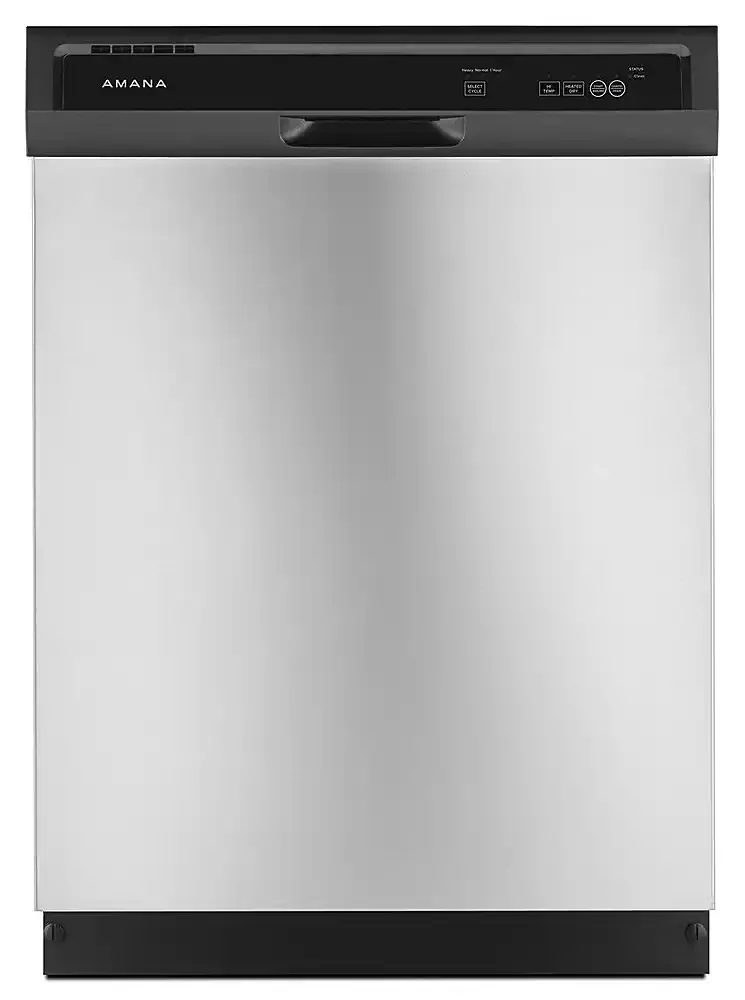
Image source: Bing (Web (fair-use with source credit))
Quick Answer
Check the door latch first. Make sure it clicks shut. Press and hold Start for 5 seconds.
If nothing happens, unplug the dishwasher for 5 minutes. Most problems are power or latch related.
Amana Dishwasher Won't Start? Work Through This Before You Call for Help
Before you open any panels, stop and disconnect the power. Unplug the dishwasher from the wall outlet. Or flip the circuit breaker to the off position.
Then turn off the water supply valve under the sink. These two steps are non-negotiable before you touch anything inside the machine.
You will need a few basic tools. A flat-head screwdriver, a bucket, some old towels, and a flashlight will cover most checks. If you own a multimeter, keep it handy for testing switches and valves.
But many fixes do not require one.
Start with the simplest check first. Is the dishwasher actually getting power? Look at the outlet or the breaker box.
If the breaker tripped, reset it and try running a cycle again. If it trips again immediately, you likely have a short in the machine. That is a sign you need a professional.
Next, examine the door latch. Push the door firmly until you hear a solid click. Amana dishwashers use a mechanical latch that also engages an electrical switch inside.
If that switch is not pressed, the machine thinks the door is open and will not start. Open and close the door several times, listening for the click. If it feels loose or does not click, the latch assembly may need replacement.
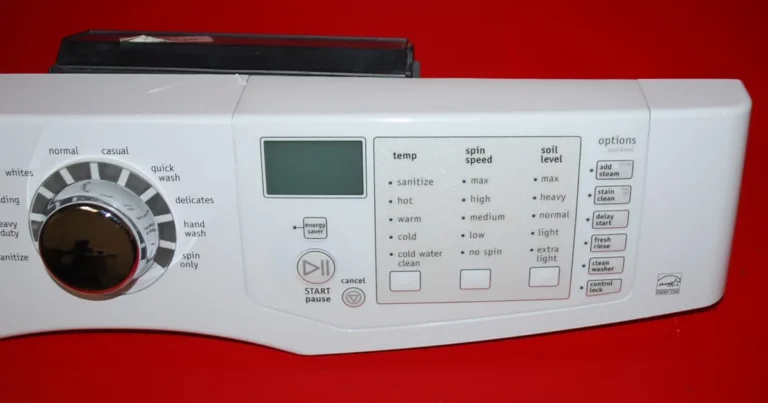
Check the control lock feature too. On some models, holding the Heated Dry button for three seconds locks the control panel. The dishwasher will not respond to any button presses until you unlock it.
Look for a small lock icon on the display. If you see one, hold the same button again for three seconds to disable the lock.
Know Your Amana Model: Dial, Buttons, or Digital Display
Amana has produced dishwashers with three control types over the past two decades. Knowing which one you have changes how you troubleshoot and reset the machine. The easiest way to identify your model is to look at the upper edge of the door or the inside of the tub.
The model number label is usually there.
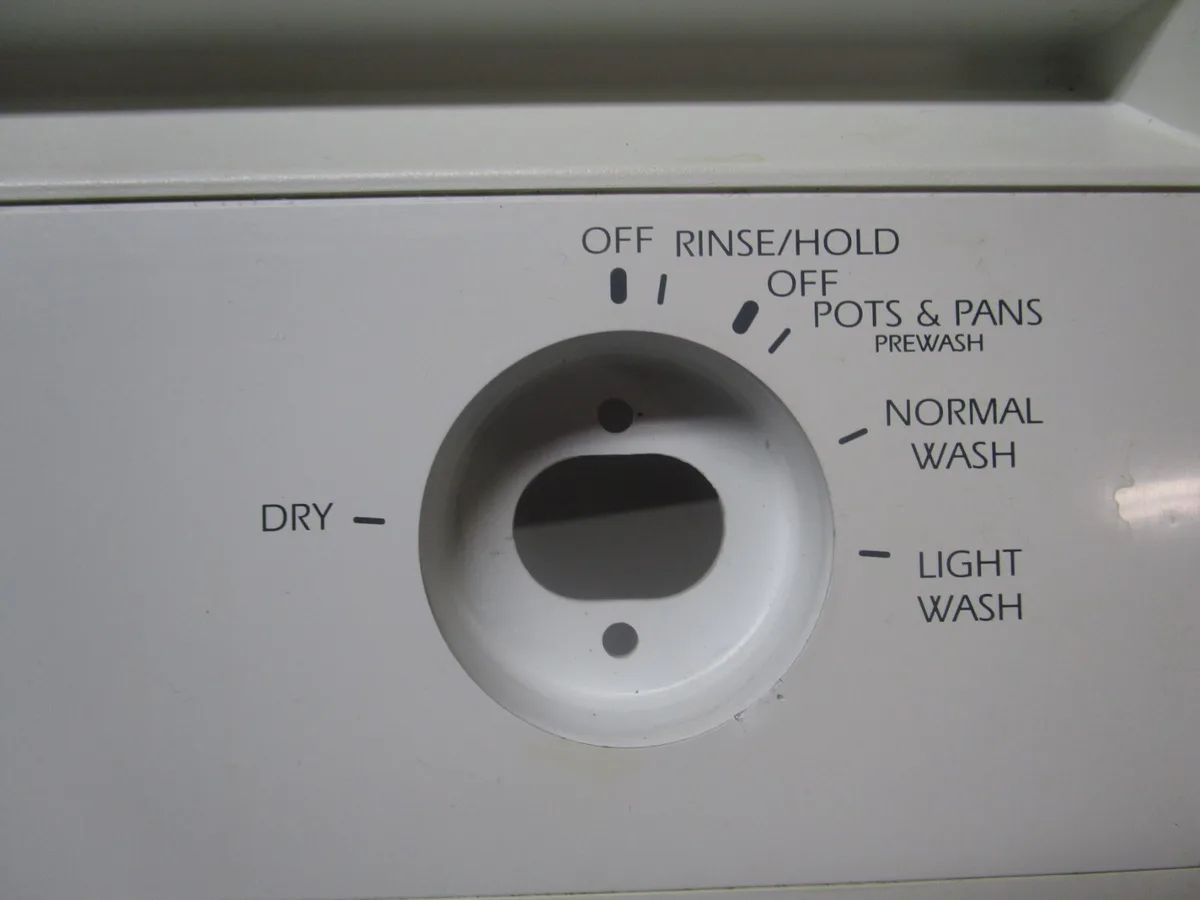
Image source: Bing (Web (fair-use with source credit))
Mechanical dial models use a rotary knob to select the cycle and a push-button switch to start. These are the simplest to work on. If the knob will not turn or feels stuck, the timer motor inside the control panel may have failed.
Dial models also tend to have fewer electronics. That means fewer random control-board failures.
Electronic push-button models have a row of membrane or tactile buttons for cycle selections. They may have a digital display or just indicator lights. These models often include a diagnostic mode you can activate to read error codes.
The reset procedure is usually pressing a specific button combination. For many Amana push-button units, holding Start for 5 seconds cancels the current cycle and resets the control board.
Digital display or smart models include a full LED or LCD panel with touch controls. These are the newest Amana dishwashers. They are essentially rebadged Whirlpool units.
They share the same diagnostic and reset logic. If the display is blank but the lights on the panel are on, the control board may need a hard reset. Unplug it for 5 minutes.
Knowing your control type helps you follow the correct steps. It also helps you look up the specific error code chart for your model. Amana's official support site provides free user manuals and tech sheets for most models produced since 2000.
The Amana Dishwasher Decision Tree: Match Your Symptom to the Fix
Instead of guessing, use this decision tree. Match your symptom to the most likely cause. Then follow the branch to the fix.
| Symptom | Most Likely Cause | Next Action |
|---|---|---|
| Won't start, no lights | No power, tripped breaker, or door latch | Check power and latch first |
| Lights on but won't start | Door latch switch or control lock | Test latch continuity; unlock control |
| Starts then stops early | Float switch stuck or drain pump blocked | Check float moves freely; clean pump |
| Fills but won't drain | Clogged filter or drain hose kink | Clean filter and inspect hose |
| Won't fill with water | Float switch stuck in raised position or inlet valve | Manually press float down; test valve |
| Dishes still dirty | Spray arms blocked or filter dirty | Clean both thoroughly |
| Water leaks | Door gasket, drain hose connection, or tub crack | Inspect gasket and hose fittings |
| Loud noise during cycle | Hard food disposer blade stuck or debris in pump | Remove blockage from disposer area |
If your symptom is won't start, follow the power and latch branch first. If the dishwasher starts but stops early, the float switch is the most common culprit. If it fills but won't drain, the filter or drain pump is likely blocked.
Each branch has its own set of steps, covered in the sections below.
Step-by-Step Fixes: Power, Door Latch, Float Switch, and Control Reset
These four fixes cover the majority of Amana dishwasher problems. Perform them in this order.
1. Restore power and reset the control board
Unplug the dishwasher and wait 5 full minutes. Plug it back in. Then press the Start button and hold it for 5 seconds.
If the dishwasher starts, the issue was a temporary control lock or memory glitch. If not, move to step 2.
Image source: Web (Bing) / maker.parkbankduo.de (Web image (fair-use with source credit))
2. Check the door latch
With the power off, open the door and look at the latch mechanism. Amana models have a plastic catch that hooks into a metal strike plate. Over time, the catch can break or the strike plate can bend.
This prevents the latch from fully engaging. Use a flashlight to check for cracks. If the latch feels loose, you will need to replace the entire latch assembly.
Part numbers vary by model. They run about $15 to $30 online.
3. Test the float switch
The float switch is a small cylindrical device inside the dishwasher tub. It is usually near the front left or right corner. It floats up when water is present and signals the control board to stop filling.
If it gets stuck in the raised position, the dishwasher thinks it is full and will not fill or start. Gently press the float down with your finger. If it moves freely and clicks, it is fine.
If it is stuck, clean around it with a toothbrush. If it is broken, replace it.
4. Clear the drain pump area
If the dishwasher will not drain, remove the bottom rack and spray arms. Locate the filter assembly at the bottom center of the tub. Remove the filter and look for food debris, broken glass, or small objects blocking the drain opening.
Reach into the opening with a wet/dry vacuum hose to suck out debris. This is the most common fix for drainage issues.
If all four checks pass, the problem may be a failed control board or a wiring issue. At that point, it is often more cost-effective to call a professional.
Amana Dishwasher Not Draining or Not Filling: The Water Flow Branch
Water flow problems are the second most common complaint after "won't start." They usually fall into one of two categories. The dishwasher may not fill at all. Or it may fill but not drain.
The troubleshooting path is different for each.
If the dishwasher won't fill
Listen for a clicking sound after you start the cycle. That clicking is the water inlet valve opening. If you hear it but no water comes in, the valve may be clogged.
The screen inside it may be blocked by sediment. Shut off the water supply and disconnect the fill hose from the valve. Check the small mesh screen inside the valve opening.
If it is clogged with debris, clean it with a small brush. If the screen is clear, the valve coil may be burned out. You can test it with a multimeter.
Continuity should read between 200 and 500 ohms.
Before blaming the valve, verify that the water supply to the dishwasher is on. Check that the shut-off valve is fully open. Homeowners often accidentally bump the valve under the sink to a partially closed position.
If the dishwasher fills but won't drain
Start by removing the filter assembly. Amana dishwashers use a self-cleaning filter system on some models and a manual mesh filter on others. Both can become clogged with food particles.
Clean the filter with warm, soapy water and a soft brush.
If the filter is clean, inspect the drain hose. Look for kinks where the hose bends under the sink or behind the dishwasher. The hose must maintain a high-loop at least 32 inches above the floor to prevent backflow.
If the loop is missing or too low, the machine may not drain properly.
Finally, check the drain pump impeller area. Remove the bottom rack and look into the drain opening at the bottom of the tub. Use a flashlight to see if any solid objects are blocking the impeller.
A piece of broken glass or a stuck bottle cap can stop the pump from turning. Remove any debris carefully with long tweezers or needle-nose pliers.
If none of these clears the drain, the drain pump motor may be dead. That replacement runs about $40 to $60 for the part. Add an hour of labor if you hire someone.
Amana Dishwasher Leaving Dishes Dirty: Cleaning Performance Branch
If your dishwasher runs through a full cycle but dishes come out dirty, the problem is usually mechanical. Start with the spray arms. Remove the bottom rack and lift off the lower spray arm.
Check the holes for clogs. Use a toothpick or paper clip to clear any blocked openings. Rinse the arm under running water.
Next, check the upper spray arm. On some Amana models, the upper arm attaches with a nut or a clip. If it does not spin freely during a cycle, the bearing may be worn out.
Spin it by hand. If it feels gritty or does not turn, replace the assembly. Upper spray arms cost roughly $20 to $35.
The filter system is another common culprit. Amana dishwashers use a stainless steel mesh filter at the bottom of the tub. If that filter is clogged, water cannot circulate properly.
Remove the filter, rinse it under hot water, and scrub it with a soft brush. Do this every two weeks for best results.
Hard water deposits can also cause poor cleaning. If you see white film on glasses or dishes, the wash temperature may be too low. Manufacturer specs recommend an incoming water temperature of 120°F to 130°F.
Run the kitchen faucet hot for a minute before starting the dishwasher. That ensures the first fill is hot enough to activate the detergent.
Check the detergent dispenser. If the dispenser door does not open during the cycle, a broken latch or a wax motor may be the cause. Manually open the dispenser before starting the cycle and see if the dishes clean better.
If they do, the dispenser mechanism needs replacement.
Finally, verify you are using the correct detergent. Use a quality dishwasher detergent in powder or liquid form. Avoid using too much detergent.
Excess suds can reduce cleaning power. If you have hard water, add a rinse aid to help with drying and spot prevention.
Mistakes to Avoid When Troubleshooting Your Amana Dishwasher
Homeowners often make the same errors when trying to fix a dishwasher. Avoid these to save time and prevent damage.
Mistake 1: Skipping the power reset
Many people replace a part before trying a simple power cycle. Unplug the dishwasher and wait 5 minutes. This resets the control board and clears temporary error codes.
It costs nothing and fixes about 15% of "won't start" cases.
Mistake 2: Assuming the worst
A dishwasher that will not start is not always broken. Check the door latch first. If the latch does not click, the machine will not run even if everything else is fine.
The latch is a $15 part and takes 10 minutes to replace.
Mistake 3: Ignoring the float switch
The float switch is a small plastic cylinder inside the tub. If it sticks in the raised position, the dishwasher thinks it is full and will not fill. Many owners replace the water inlet valve before checking this simple switch.
Always test the float first.
Mistake 4: Overlooking the filter
A clogged filter is the leading cause of poor cleaning and drainage issues. Clean the filter every two to four weeks. If you cannot remember the last time you cleaned it, that is likely your problem.
Mistake 5: Using the wrong detergent
Liquid dish soap creates excessive suds inside a dishwasher. Those suds can leak out the door and damage the control board. Only use detergent labeled for automatic dishwashers.
Mistake 6: Replacing parts without testing
Guessing which part to replace leads to wasted money. Test each component with a multimeter. Or use the decision tree above to narrow down the cause.
A $10 multimeter can save you from buying a $50 part you do not need.
Mistake 7: Forgetting the drain hose high loop
If the drain hose droops below the sink drain, water can siphon back into the dishwasher. This creates standing water that causes odor and drainage problems. The hose must form a high loop at least 32 inches above the floor.
Mistake 8: Overusing rinse aid
Too much rinse aid can cause a sticky residue on dishes. Fill the dispenser only to the maximum fill line. If you see a slippery film on your glasses, reduce the rinse aid setting.
When to Stop DIY and Call a Pro: Safety, Cost, and Repair vs. Replace
Some repairs are safe and easy for a homeowner. Others require expertise or pose a risk of injury or flooding. Know the difference.
Call a pro if you see any of these signs:
- The circuit breaker trips immediately when you plug the dishwasher in. This indicates a short in the wiring or control board.
- Water leaks from underneath the dishwasher even when it is not running. A leak could mean a cracked tub or a failed water inlet valve.
- The dishwasher produces a burning smell. Stop using it immediately and call a technician.
- The control board is visibly damaged or burned. Board replacements often cost more than the dishwasher itself.
- You have a newer model with advanced electronics. These sometimes require proprietary diagnostic tools that DIYers do not have.
Cost comparison for common repairs (as of 2026):
| Repair | DIY Part Cost | Pro Service Call Estimate |
|---|---|---|
| Door latch replacement | $15 to $30 | $150 to $250 |
| Float switch replacement | $10 to $20 | $150 to $250 |
| Drain pump replacement | $40 to $60 | $200 to $350 |
| Water inlet valve replacement | $30 to $50 | $200 to $350 |
| Control board replacement | $80 to $150 | $300 to $500 |
| Heating element replacement | $25 to $40 | $200 to $300 |
When to replace the whole dishwasher:
- If the repair estimate exceeds 50% of a new dishwasher's cost. A basic Amana model runs $350 to $600 as of 2026.
- If the dishwasher is over 10 years old and the control board has failed. Newer models are significantly more energy efficient.
- If the tub is cracked or rusted. That is a structural issue that cannot be repaired economically.
Safety reminders for any DIY repair:
- Always unplug the dishwasher or turn off the circuit breaker before opening any panels.
- Turn off the water supply at the shut-off valve under the sink.
- Use a multimeter correctly. Test for voltage before touching any terminals.
- If you are unsure about any step, stop and call a professional. A mistake can cause flooding, electrical shock, or fire.
Frequently Asked Questions
Why won't my Amana dishwasher start?
The most common cause is a tripped circuit breaker or a faulty door latch. Check the breaker box first. Then open and close the door firmly until you hear a click.
If that does not work, unplug the dishwasher for 5 minutes and try again.
How do I reset my Amana dishwasher?
Unplug the dishwasher from the wall outlet. Wait 5 minutes. Plug it back in.
Press the Start button and hold it for 5 seconds. This clears the control board and cancels any error codes.
What does it mean when my Amana dishwasher keeps beeping?
Beeping usually indicates a control lock is enabled or an error code is stored. Look for a small lock icon on the control panel. If you see it, hold the Heated Dry button for 3 seconds to unlock.
If the beeping continues, check the error code chart in your owner's manual.
Why is water pooling at the bottom of my Amana dishwasher?
The most common cause is a clogged filter or a blocked drain pump. Remove the bottom rack and clean the filter assembly. If water remains, check the drain hose for kinks and the drain pump impeller for obstructions.
How do I clean the filter in my Amana dishwasher?
Locate the filter at the bottom center of the tub. Twist it counterclockwise to remove it. Rinse it under hot water and scrub with a soft brush.
Replace the filter and twist it clockwise until it locks. Clean the filter every two to four weeks.
Can I use regular dish soap in my Amana dishwasher?
No. Regular dish soap creates excessive suds that can damage the control board and cause leaks. Only use detergent labeled for automatic dishwashers.
How do I know if my Amana dishwasher needs a new door latch?
If the door feels loose or does not click when you close it, the latch may be broken. You can test the latch switch with a multimeter. If it shows no continuity when pressed, replace the latch assembly.
Final Decision Guide: Fix It or Replace It?
You have worked through the troubleshooting steps. Now you need to decide whether to repair the dishwasher or buy a new one. This guide helps you make that choice based on cost, age, and symptom.
Fix it if:
- The problem is a simple part like a door latch, float switch, or filter. Those parts cost under $30 and take less than an hour to replace.
- The dishwasher is less than 8 years old. Most Amana models have a lifespan of 8 to 12 years. A repair now may buy you several more years.
- The repair cost is under $150. Even if you hire a pro, a simple repair is cheaper than buying a new machine.
Replace it if:
- The control board is faulty. Board replacement often costs $150 to $500 plus labor. That is close to the cost of a new Amana dishwasher.
- The tub is cracked or rusted. This is a structural failure that cannot be reliably repaired.
- The dishwasher is over 10 years old and has multiple failing parts. Repairing an old machine can become a cycle of one fix after another.
- Your model uses excessive water or energy. Newer Energy Star rated models use about 3.5 gallons per cycle instead of 7 to 10 gallons.
- You have already spent $200 or more on repairs in the past year. Those costs add up fast.
Decision flow:
- Is the dishwasher less than 8 years old? If yes, fix it. If no, move to the next question.
- Is the repair cost less than 50% of a replacement? If yes, fix it. If no, replace it.
- Is the problem a simple mechanical part like a latch, float, pump, or valve? If yes, fix it. If no, move to the next question.
- Does the machine have a cracked tub or burned control board? If yes, replace it.
- Are you comfortable doing the repair yourself? If yes, the cost is lower and it is worth fixing. If no, factor in labor costs and compare to a new machine.
In most cases, an Amana dishwasher with a single mechanical failure is worth fixing. Those repairs are cheap and straightforward. A machine with multiple issues or a failed control board is usually better replaced.
Use the table below to compare options.
| Option | Typical Cost | Time Required | Best For |
|---|---|---|---|
| DIY repair | $10 to $60 | 30 minutes to 2 hours | Simple part replacement, confident homeowner |
| Pro repair | $150 to $400 | 1 to 3 hours | Complex repairs, no DIY tools |
| New dishwasher | $350 to $600 | 1 to 2 hours installation | Old machine, multiple failures, cracked tub |
The smartest move is to start with the decision tree. Work through each branch. Stop as soon as you find the fix.
Most Amana dishwasher problems are simple to solve. You can have your machine running again in less than an hour. And if you cannot fix it yourself, you will know exactly what to tell the technician.